All in Books

Some books etch themselves into my mind, become part of me, my experience, my emotions.

The ones that do that best are those that sneak up on me, ingraining themselves without my even realizing it. Antonia Michaelis’ The Storyteller is one of those—it didn’t seize me, it gently corralled me before I knew I was lost to its power.

Embroiled in the fairy-tale woven into reality with magical words giving beauty to a dark and haunting edged world, Michaelis’ writing lulled me like a melody until the harsh reality clambered to wake me to the sorrow, the pain behind the beauty of The Storyteller’s reality.

I love this book, which combines Shakespearean tragedy laced with the magical realism of Gabriel Garcia Marquez.  

Tomorrow Land by Mari Mancusi hit my sweet spot for book brain candy.

And, yes, that’s a compliment—good book brain candy is hard to come by. However, I want to say from the outset that Tomorrow Land is campy. It’s cheesy. It’s over-the-top. But, I love action movies and comic book-inspired movies, so I’m always up for a bit of ridiculousness in my entertainment. If you don’t enjoy those things too, Tomorrow Land is not at all for you. 

Previously published in paperback as Razor Girl by now-defunct Dorchester (Goodreads, Amazon), Tomorrow Land is available only as an ebook (I believe it’s self-published, but it’s obviously professionally edited and formatted) at the moment. It is my understanding that Tomorrow Land was retooled as a YA novel while Razor Girl was an adult novel (I am curious as to the differences—Google hasn’t helped in determining this). 

The premise is a bit… wild.

I have recently embraced the DNF (did not finish). I used to slog through books I hated simply because I, in some weird way, felt like I owed it to the book to finish it. 

I now realize this is a ridiculous perspective. 

If a book’s not working for me, despite that everyone else seemingly loves it, I drop it. These books go into one of two piles:

  1. DNF; or
  2. On hiatus.

 On hiatus books are those I plan on revisiting—maybe I’m not in the mood for the genre, but I suspect I’ll enjoy it later. Or, perhaps it’s really long, but I care about what happens, but need to take a break from spending so much time within the space of that book. DNF’s are those I drop like a hot potato. 

{Review} Raised By Wolves by Jennifer Lynn Barnes

You can decide who you want to be, who you want to be tied to. Who you can trust.

I never thought I’d be such a fan of werewolf and shapeshifter novels—but they’ve recently become some of my favorites. 

Patricia Briggs’ Mercy Thompson series (Amazon, Goodreads) is one to which I am hopelessly addicted, I enjoyed Maggie Stiefvater’s Wolves of Mercy Falls trilogy (Amazon, Goodreads) and consumed Rachel Vincent’s Shifters series (Amazon, Goodreads). There’s something captivating about stories of people who are not entirely people, that are connected to the animal world in a different way. And, when these novels are done well, the dynamics of “the pack” are absolutely compelling—typical family drama amplified. 

Jennifer Lynn Barnes’ Raised by Wolves is the first in her young adult werewolf series focusing on a human girl adopted by the Alpha of a werewolf pack after a rogue wolf killed her parents. At 15, Bronwyn Alessia St. Vincent Clare has only experienced the rigid life of the pack.

Bryn has emblazoned in her mind a bloodbath of loss that not even the Alpha can erase: She hid while a rabid werewolf bit and killed her parents before searching desperately for his true query. Bryn herself. Later, Callum finds her hiding like a mouse curled under the sink. He adopts, saves and schools her in the ways of wolves.

Rule one. No rational werewolf would bite a human. The ramifications are horrific.

Warring, warring, a love triangle and more warring.

I had such high hopes for The Shadow Reader—I’d read a number of rave reviews of it and since I’m desperately seeking a new urban fantasy series, I decided to give it a shot. Unfortunately, Sandy Williams’ debut novel, fell flat for me despite its creative premise.

Mckenzie is a Shadow Reader. And, despite her incessant complaining (which is understandable, given all the warring she winds up involved in as a result of this job), this is a pretty sweet gig. Basically, she can read a fae’s (which is basically a magical badass fairy-type person) location when they “fissure” (move from one place to another). She’s really, really good at her job, so her services are in hot demand. She’s been at this job since she was teenage, when the Fae King’s Swordmaster (annnnnd… this is where I should have reminded myself that fae-based urban fantasy simply isn’t my thing—too much royalty) recruits her. During her decade of service with the fae court, she falls in love with the swordmaster, Kyol, though much of the time he chooses to not allow the relationship to progress. So, Mckenzie plans on quitting her job just as soon as she finishes her last exam and gets her degree. Except during that last exam, Kyol interrups her on Very Important Fae Business™ and drags her off into the middle of a fae battle, during which she is kidnapped by a fae rebel, Aren.

This all happens in the first couple chapters. 

At which point, I thought, 

This book is either going to be a badass action trip or tediously detailed as these fae battle for supremacy. 

Unfortunately, we went through Door #2. 

So… domestic violence

We are all peripherally aware of its unfortunate existence.     

Especially when we read truly horrifying news reports like this.

Then we smile and celebrate the triumphs of stories like this.

But when it comes to repeated, cyclical abuse, we tend to,

  1. Educate ourselves for two hours via the latest Lifetime Original Movie; or 
  2. Be cynical and blame the victim with thoughts such as, “Sure, the abuser is wrong for abusing and all, but the victim should have just left after the first time it happened, right? At least after the second time, for goodness sakes! Just follow the directions here!”

The realities of this ongoing societal plague are oh-so-much-more complex than either of the above sheltered attitudes, which author Swati Avasthi demonstrates in her absorbing debut novel, Split.

Sometimes, you read a book and it fills you with this weird evangelical zeal, and you become convinced that the shattered world will never be put back together unless and until all living humans read the book. 

People have written really amazing and thorough reviews of John Green’s latest, The Fault in Stars, because it’s really, really wonderful and readable and gut-wrenching

I, however, have been left unable to form a coherent thought about this book—nearly two months after finishing reading it. But nevertheless, I feel like I need to say something about it, because the book (as well as attending the Tour de Nerdfighting) really hit me and actually changed my thinking.

For real.

Anyway, like I said, since everyone’s reviewed it, I thought I’d just share a few of my reflections on this special novel. I mean, there’s a big blobby tear stain in my book. And I kind of think I’m too old to be crying over books, because, you know, I have to deal with real life and all that stuff, but geez… I guess I’ll never stop crying over books. The Fault in Our Stars also made me laugh out loud. Especially the thing about the Swedish rap. Which is why it’s so good, because any book that can combine all those things is so, you know, “wow.” 

Why I ♥ The Fault in Our Stars


Gentlemen Prefer Nerds by Joan Kilby
I should’ve listened to my instincts that a book titled, Gentlemen Prefer Nerds wouldn’t work for me. 

However, I was compelled to hit the “request” button on Net Galley when I saw that, 

  1. It was published by Carina Press, the massively cool e-publisher that’s doing a lot of creative things both in what they’re publishing and their marketing and DRM-free books;
  2. It promised a heist/caper sort of scenario and I am a giant sucker for heists and/or capers; and
  3. It’s set in Australia.

Unfortunately, those positives didn’t cancel out the numerous problems I had with the premise and characters in this novel. 

The basic plot of Gentlemen Prefer Nerds is that nerdy (more on that later) girl gemologist Maddie Maloney is charged with caring for a pricey diamond known as The Rose (she also discovered the diamond in a mine in Western Australia). As part of her effort to find a nice man, she ends up being conned by a jewel thief known as The Chameleon into allowing him access to the stone, which is then—shocker!—stolen. Maddie is, obviously, suspected for the crime and winds up hooking up with a mysterious English dude who promises to help her recover the diamond and helps her escape from the police while they pursue the thief. 

Okay, so the premise is pretty silly—but I’m often okay with silly premises!

George Pelecanos, along with Dennis Lehane and the marvelous Elmore Leonard, is one of my go-to authors if I want a crime fiction fix. 

I’ve read all of Pelecanos’ (who’s known by lots of folks for his work writing some of the best episodes of The Wire) novels and my husband wrote his MA thesis on Pelecanos’ early series, the DC Quartet (back when Pelecanos was only known by crime fiction nerds), so it’s hard for me to look at his books in isolation—I always find myself thinking about them in comparison to his other works.

In particular, I have a nostalgic affection for The Sweet Forever (Goodreads, Amazon) and The Big Blowdown (Goodreads, Amazon), which are raw and somewhat less self-conscious than his later, longer novels. Lit-fic fans tend to prefer Pelecanos’ Derek Strange novels because the social commentary is more overt, but I love the strong sense of time and place in the earlier ones. 

Fortunately, Pelecanos’ latest release, What it Was, follows the style of his earlier, shorter hard-boiled crime novels.

{Review} Truth by Julia Karr

On the day before I started reading Truth, the sequel to the excellent 2011 release XVI, I tweeted the following:

I kind of feel like I just need to quit dystopians cold turkey. At this point, they’re just aggravating me. Hopefully ninjas or something will be the next big thing, because I need something new.

Actually, yes, ninjas would be excellent.

Then I picked up the sequel to my favorite 2011 dystopian release* and remembered that the subgenre isn’t quite on life-support yet. 

Truth picks up shortly after XVI left off—if you have not read XVI or need a refresher, here’s a quick rundown of the premise and what I appreciated about it (my Goodreads review is here): 

  • Nina Oberon lives in a future version of the United States ruled by a misogynist Governing Council with the aid of a corrupt version of the media;
  • One of the main keys to the government’s control over the population is their control over the sexual availability of girls once they are 16—each girl gets a tattoo of “XVI” on their wrist and is therefore deemed available to any man who wants them, it is a culture that encourages rape and sexual control, and it is extremely disturbing;
  • The role the media plays in pushing teen and tween girls to act and behave in a way that encourages this culture is even more disturbing because it is not all that different from modern Western society;
  • Nina’s family has a history of involvement in the resistance movement and she becomes increasingly involved in it herself as she approaches her sixteenth birthday. (This is one of the things I most appreciated about XVI—there was context for her fighting the powers that be. In so many YA dystopians, the lead is just  a special snowflake and we’re just supposed to accept that’s why she’s fighing the bad guys.); 
  • Karr’s writing is tight and makes the Nina’s hyper-commercial, disturbing world come to life; and
  • I read XVI as a standalone, not knowing it was a planned trilogy and it actually worked as a single book!

If you have not read XVI, and don’t want to be spoiled for that book, I strongly recommend you do not continue reading my review of Truth! Do not pass Go!, instead, read XVI, and come back and read my review of Truth.

You know that love-hate thing that everyone has with Julie Taylor on Friday Night Lights?

I had that same relationship with this book and with Ella, the narrator of Melissa Jensen’s The Fine Art of Truth or Dare. On one hand, she really is smart, and she matures throughout the story, on the other hand, like Julie, I didn’t find myself rooting for Ella to get the nice guy love interest, Alex, until the very end (kind of like Julie). 

Ella is a working with a  somewhat visible scar, on a scholarship at The Willing School, a wealthy private school in Philadelphia. Unlike her classmates, she lives in the neighborhood in which the school is located, where her family also runs a restaurant. In TFAoToD, we follow her as she navigates class differences, changing relationships with friends, mean girls, a research project about a dead artist and a budding relationship with her lacrosse star French tutor. 

Sounds like a lot? It is, even though the book is relatively lengthy for a contemporary YA at 380 pages.

There is, however, a lot to like in this novel.

Chopsticks is probably best described as a graphic novel… sort of… about forbidden teenage love and mental illness.

But that’s not a particularly descriptive description.

Part scrapbook, part narrative, Chopsticks in an innovative approach to storytelling. This contemporary YA tells the story of Glory and Frank, next door neighbors that fall in love and are rapidly split apart by both distance and Glory’s father. Glory is a piano prodigy slowly descending into a dark world, where she’s only able to play Chopsticks on the piano and obsesses over Frank’s drawings. Frank is a gifted artist who’s failing out of his prestigious prep school. Chopsticks takes the reader through the couple’s tale in photo, snippets of IMs, YouTube video links, drawings and mementos from their relationship. 

Beyond the IMs and occasional scraps of paper with notes and lists, there are no words in Chopsticks. 

Editor’s Note: This is a special guest review from my mom. Sandra is a retired high school English teacher with a lot of opinions and a newfound love of YA literature and urban fantasy—she’s a longtime fan of horror, campy mysteries and police procedurals. As a kid, her goal was to grow up to be Nancy Drew, so much so that she carried around a notebook to report on her neighbors’ potenital criminal activities. We’re hoping that she’ll start every review like this one—with an f-bomb.

Evisceration is so fucking cool!

Kit and Fancy, the Cordelle sisters, take you through a portal into another world that’s bizarre and fascinating.

It’s a world where evisceration’s cool, where a crowd of gorgeous people born to carry their heads in their hands have star status, where imps pass from one person to another through kisses and buried bodies grow into trees sprouting the fruit of their inhumanity.

Portero, Kit and Fancy’s hometown, is a place unlike, yet like, those we know.

C.K. Kelly Martin is one of my favorite “sleeper” young adult authors.

It boggles my mind that her work is not more widely known. The Lighter Side of Life and Death is an outstanding example of authentic, engaging teen male point of view, while One Lonely Degree is a heartwrenching story of friendship. (I haven’t read I Know It’s Over, as it deals with teen pregnancy and I usually avoid that theme, but many folks have told me it’s excellent as well.)

My Beating Teenage Heart was unexpected. 

Author’s Note: I read the Australian edition of this shortly after it was released. It is my understanding that the U.S. edition has some significant differences from the one I read.

This is one of those books that make me sound like a crazed superfan.

When I finished Graffiti Moon, I got out of bed, went to my laptop and emailed some friends a breathless message along the lines of,  

Alert! Alert! Omigod. You have to—have to—read Graffiti Moon immediately!

I love, love, love this novel that much.

I ordered Love & Leftovers soon after I finished Audition because I’d really enjoyed that novel in verse and I’d remembered that April had really enjoyed this one as well. The verse in Love and Leftovers is actually far more enjoyable than in Audition, as it plays with form to build tension throughout the novel. If you’re nerdily interested in that sort of thing, L&L is worth reading for that aspect alone.

What I was really surprised by was how compelling and “edgy” (ugh, I hate that word) this one is. The marketing for L&L made me assume it was a “cute/sweet” read (I’ve got no problem with that at all), but it actually dealt with a lot of issues in a realistic manner, particularly teens and intimacy in many of its forms. Marcie is dragged on a permanent vacation from her hometown of Boise to New Hampshire by her mother.

FNL Character Rating: Luke Cafferty/Landry Clarke*!!!!

(* I tend to be biased against Landry because he looks a lot like one of my ex-boyfriends, BUT his nerd-to-football player persona works for this rating. And I didn’t even necessarily like the main character of the book, so that works too. And I ADORE Luke, and his cute, sensitive persona works for this rating too.)

On to the Actual Review…

So, I’m at this point in my life where puberty is far enough in my past that I find teenagers bewildering. I find myself too old to relate to them anymore. When I see them hanging out at the bus stop in front of where I work, I think to myself old people thoughts like, “Why are those kids yelling while having a conversation when they’re standing right next to each other?!” Or, “Why are they texting each other when they’re standing right next to each other?!” Or, “What’s with those pants? Are they pants? Their parents paid for those pant-things AND let them wear them in PUBLIC?!” 

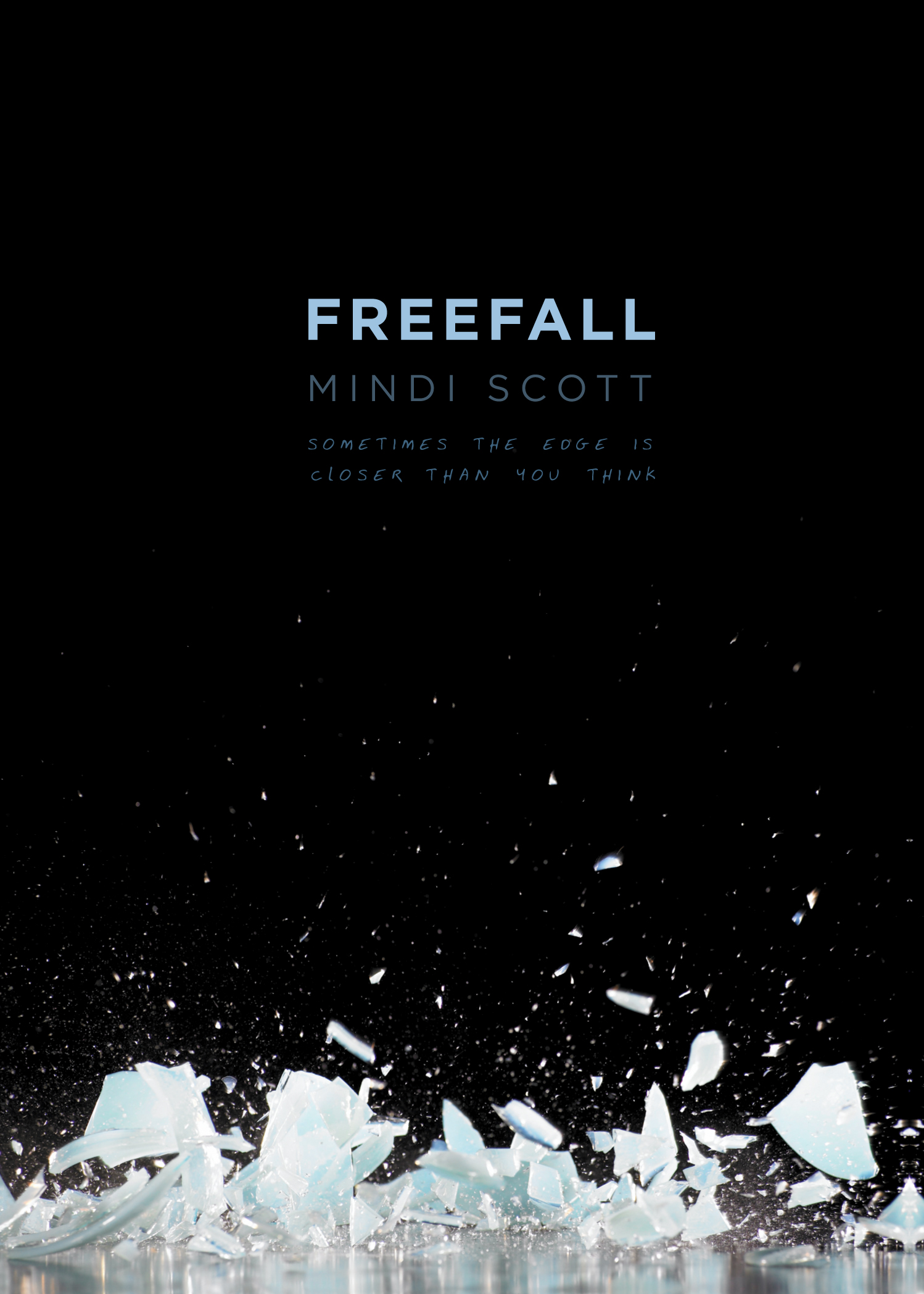
{Review} Freefall by Mindi Scott

FNL Character Rating: Vince Howard!!!!!

{Editor’s Note: This is one of my favorite all-time novels, and one I recommend to people who think they don’t like YA fiction. I recommended this to Laura and I was thrilled that she loved it as much as I do. What’s even better is that Laura got different things out of it because of her own experiences with music, so it was doubly awesome to read her review. ~Sarah}

The first thing I loved about this book was the voice.

It is so rare and refreshing to read a YA book from a male POV. Author Mindi Scott, manages the very difficult task of making me, a 31 year old female adult, relate to a 16 year old teenage boy’s POV. It is seriously freaky how Mindi Scott managed to write wrote the male version of me (personality and humor) wise into a book character in Seth McCoy. 

I don’t read a lot of novels in verse, nor do I read a lot about dance. The former is more because I don’t really know how to sift through the good stuff and the bad stuff, the latter because dance (especially ballet) kind of freaks me out—the body obsessive, intense grind of it is extremely disturbing to me. However, despite my reluctance with both of these elements, Audition was a fantastic read. 

Interesting Themes

Fish out of water, rural girl in an urban, sophisticated setting, is one of my favorites and it’s handled so, so well. Having lived that experience as a 17 year old, I appreciate when this is done well, and in a nuanced, non-stereotypical manner. Audition really nails the feelings of having the wrong everything—the wrong clothes, the wrong accent, etc. I haven’t seen this addressed in a lot of reviews, but it’s an important element. 

{Review} Kindling the Moon by Jenn Bennett

Whoo, boy, this one was fun!

I enjoyed the hell out of Jenn Bennett’s debut urban fantasy novel. I’ve tried so many new UF series the last few months as I tried to fill the void until the next Mercy Thompson installment comes out in 2013 (arg!) and so many have been “meh” to me—but this (along with Rachel Vincent’s new Blood Bound series and Rachel Caine’s new Working Stiff series) is an exception. I would almost give Kindling the Moon five stars, but the resolution came very quickly, and it felt jarring to me as a result.