All in Books

It was strange being there, eating dinner with them. They knew that I knew, and I knew that they knew, and there we all were, a zombie, an assortment of werewolves and/or weredogs, and me, a nurse who was getting used to dealing with vampires. I was struck by how completely normal it felt to be with them, for all of our differences.

Nightshifted by Cassie Alexander

Dragons and vampires and zombies… oh my!

Cassie Alexander’s debut urban fantasy novel, Nightshifted, hits a sweet spot with an appealing mix of action, imagination and humor, with just the right dash of romance. 

I picked up Nightshifted on the recommendation of Angie, whose taste in Urban Fantasy seems to be pretty similar to my own. She promised that this book featured a jaded heroine who’s easy to root for and a gritty world, and did Nightshifted ever deliver. 

Edie has taken a nursing job in a secret ward, Y4, at a run-down county hospital. The patients there aren’t quite… normal. They’re paranormal beings of all sorts, and many of them are very, very dangerous. Despite the low pay and occupational hazards, Edie works there as part of a deal with some unsavory characters who promise to use their magical mojo to keep her addict brother off of drugs following a near-overdose. 

Edie’s stuck. 

Things get a whole lot worse when a “Daytimer” (a semi-vampire thing—it makes sense, trust me) dies during Edie’s shift, and she goes looking for Anna, a name he uttered with his dying breath. She stumbles upon some bad stuff, and accidentally kills a very nasty vampire in the process of rescuing Anna, who appears to be a teen girl (trust me, no one in the Nightshifted world is as they appear). As a result, Edie finds herself wrapped up in the paranormal underground, trying to save her own life. 

Edie is a fantastic narrator—she’s real and funny and prickly.

Don't You Wish by Roxanne St. ClairWhen my parents moved to the United States from Korea in 1974, they originally planned on moving back to Korea after my dad’s medical residency was finished.

Instead, for various reasons, my father accepted a job at a hospital in Western New York (the same hospital where I was born,) and they remained in the US, becoming citizens in 1981.

My parents’ decision to stay in the US and raise their children in the Rust Belt has been the root of the most enduring “what if” of my life:

What if my parents had returned to Korea and I had been raised there, on that tiny peninsula on the other side of the world?

What kind of person would I be?

Would anything about my personality, my beliefs, that which I consider to be the core of my being, be the same?

Or would the difference in culture have resulted in a completely different person, unrecognizable from the person I see in the mirror everyday?

But while I find myself curious about the idea of parallel lives and universes, I am FAR too lazy to study quantum physics and the actual scientific possibilities of their existence. (Research + controlled experiments + advanced gobbledegook science = *shudder*)

So instead, I indulge in cheesy forms of entertainment that explore the idea of,

What if I was THAT person, instead of the person that I am and lived in THAT world instead of this one?

Dreamdark: Blackbringer by Laini Taylor

Laini Taylor creates a world that sparkles like a lake on a summer afternoon in her 2007 novel for middle grade/early YA readers,  Blackbringer (Faeries of Dreamdark #1).

It’s a diverse world of faeries, a band of crows, imps, Djinns and tattooed warriors beguiling while plunging me into into a fanciful world where legends are,

…meeting life. [Where] every choice casts a shadow, and sometimes those shadows stalk your dreams.

Beautiful, delicate and fierce faerie Magpie Windwitch is the granddaughter of the West Wind who travels with her band of crows across the landscape of their world, Dreamdark,  the forest filled with all creatures bright, fanciful, dangerous and dark.. Cacophonous, her boisterous and funny crow buddies, entertain and protect, love and fight and carry the dreams of all of the creatures in their Dreamdark Forest in their hearts. Magpie comes from dreams, made from their fabric and woven into the tapestry of Dreamdark.

Dark forces gather to eradicate all that is beautiful and free in Dreamdark. Because the setting is fanciful and beautiful, the darkness encroaching upon it folds itself across the pages smothering all that shines with laughter and joy. The Blackbringer lives in a netherworld where the stars are ripped out. And, he’s been set loose to wreak his revenge upon all that is good. She holds her destiny to save her world and those she cherishes as the fuel that powers her actions.

Editor’s Note: Today we’re thrilled to welcome our newest contributor to Clear Eyes, Full Shelves, Rebeca. She’s joining us as our Official Romance Correspondent, and you may remember her from the Book Matchmaker feature a few months ago. We’ll be posting a little introduction soon, but in the meantime, welcome to CEFS, Rebeca!

Flirting in Italian by Lauren HendersonDo Italian boys really drive purple Vespas? Do I really need to answer that?

Can one book simultaneously be a Gothic mystery, a contemporary YA novel and travel writing?

Lauren Henderson has tackled this interesting mash-up with Flirting in Italian.

Violet, the protagonist, has recently graduated from secondary school and aims to attend Cambridge in the fall. Her plans do not include a mysterious painting, a trip to Italy or a brooding prince. (Bad planning on her part, in my opinion.)

Luckily for both Violet and readers, her life takes a sharp turn for the more adventurous.

While preparing for her art history A-level, Violet stumbles across a painting in a museum that could be her mirror image, circa 1790. This would be remarkable enough, but she has long wondered over her lack of resemblance to either branch of her family. The painting lures her to Italy and the secrets that await her there.

Henderson does a good job establishing a tense, mysterious atmosphere in which the somewhat improbable plot makes more sense.

The heavy oak kitchen door at the far end of the long room swings open with such force that it slams against the wall. Sunshine floods in, and I realize how dark it was in here, how little natural light this kitchen has. A figure’s silhouetted against the brightness outside, tall and lean, and in the next moment it tears toward us threateningly, footsteps ringing loudly on the stone flags.

Just don’t hold your breath for all the answers as this is only the first book in a series.


Editor’s note: Every once in awhile, Laura “live blogs” her reading on Goodreads. This is invariably because a book is pissing her off tremendously and/or she got really wild and drank not one, but two, non-IPA beers. We’ve decided to immortalize such moments in a new “feature,” named in honor of Jessica “Notso” Darling

It’s 2044.

The delightful recession of our current times is still ongoing and known as the Great Recession. An energy crisis has somehow led to the development of 30-high stacked trailer shanty-towns, one of which is where our protagonist and narrator, Wade Watts, lives, but not where he spends most of his time.

At this point in our future, an advanced virtual reality system exists that allows humanity to escape the misery of their real lives. Upon the death of one of the creators, James Halliday, a puzzle game within the system is revealed to exist, and whomever solves it first will inherit Halliday’s 240+ billion dollar fortune, as well as ownership and control of the system where most people spend their time.

An EVIL COMMUNICATIONS CORPORATION that I equate with Comcast will do ANYTHING to win. Including kill people.

And spend exorbitant amounts of money on virtual magic items.

After years and years of no progress by anyone in solving the puzzle, Wade—known in the system as the avatar Parzival—becomes the first person to solve the first clue.

And away we go!

The Disenchantments by Nina LaCourWhen we are young, we are whimsical dreamers.

Our parents and the adults in our lives encourage this fanciful mindset. They tell us that with hard work, we CAN INDEED be elected President of the USA, possibly even without winning the overall popular vote. We WILL INDEED see our favorite football team win the Super Bowl in our lifetime, since there’s no way they could possibly lose 4 years in a row.

But as we get older, we are encouraged to break up with our dreams in favor of “attainable goals”. Instead of President, what about Mayor’s administrative assistant? Instead of a Super Bowl win, how’s about rooting for a playoff berth? Scratch that. How’s about rooting for a .500 season? And so on.

About the same time we begin to realize that all the smizing practice in the world won’t make us skinny or tall enough to fulfill our dream of competing on America’s Next Top Model, we realize that we have to figure out what to do with ourselves with our limited 5’2” frames, we have no idea what that should be, and the combination scares us shitless, though we are loathe to admit as such.

Hence…

The Stages of Upper Middle Class Adolescence

{Review} Come See About Me by C.K. Kelly Martin

Love is real and real love lasts. I used to feel sorry for people who didn’t believe in it—the people who were lonely with someone else or lonely alone. For awhile I was was one of the lucky ones.

C.K. Kelly Martin, who’s written several marvelous young adult novels, couldn’t find a traditional publisher for her first book for adults, Come See About Me.

According to Martin, no one knew how to market a novel with a 20 year old protagonist. Come See About Me certainly isn’t a teen novel, it’s mature and addresses themes that are not seen in the YA category. And since “Adult” fiction typically features older narrators, not a recent college dropout, it couldn’t be marketed as “Adult.” Essentially, a marketing problem* prevented this novel from hitting bookstore shelves. 

This is absolutely perplexing to me.

Luckily for us, Martin couldn’t keep to herself the story of Leah, a young woman who’s life has wholly stalled following the death of her boyfriend, Bastien, who was killed while crossing the street in Toronto. She flakes on her job, fails out of school, hides from her friends and family—she can’t move forward because of the loss. She wants to be alone with her memories and sadness over what should have been, over their lost future together.

Alone is what’s easier. Everyone else would prefer that I pretend my life hasn’t been hollowed out. They believe their expectations should carry some weight with me. Only Bastien truly carries any weight and people try to use that fact against me too and tell me what he would want for me. Some of the things they say about that might be right, but since he’s not here he doesn’t get to decide how I should handle his absence.

The early chapters, in which Leah recounts her relationship with Bastien, were incredibly difficult for me to read. The two went to high school in British Columbia together, though they weren’t even friends—acquaintances is a better description—and connected later, when they both went to college in Toronto. Their love was the forever sort, not the college dating temporary sort.

It’s been a long time since I’ve been as emotionally invested in a book as I was in Cara Chow’s Bitter Melon.

It’s a difficult story of a Chinese-American mother and daughter living in San Francisco, yet it could be about any family where the parents do not allow their children to fly free, to find a life that will give the child joy and satisfaction. It’s about caging the soul of a beautiful mind as a battle ensues to find the sweet taste of freedom.

There are jewels of truth, of humanity, of hope and of sorrow glittering throughout this lovely book. Regardless of what touches your heart when you read, it will be found in Bitter Melon, including a beautifully-crafted story, realistic characters, a plethora of emotions, finely-tuned language.

Fei Ting, the daughter, holds two names. Fei in Chinese means fly. Ting means stop. Fei Ting tinkered with the meaning of her name, its nuances.

In Chinese, she thought, if she should try to fly, she would be stopped.

Her English name Frances means freedom. Fei Ting wants freedom, wants to soar with nothing holding her back but is held in emotional bondage to her mother. Her mother’s controls were built methodically, mooring every move and choice Francis sought to her angry mother’s dream of wealth and success via her own daughter’s efforts to satisfy her insatiable mother.

You will makes lots of money and buy us a nice house so I can quit my job and tell your father’s family to go to hell.

Frances hears such phrases over and over from her mother’s harsh lips, as if she is being beaten into submission with the strength of words,

You will become a doctor. You will support me, care for me.
 

Francis has always been the obedient daughter, bending to her mother’s will, to her wishes.

Imagine living the first eighteen years of your life fed by a vitriolic and hateful analysis of your qualities by your own mother. You’re not smart enough. You’re not pretty. You’re too fat. You’re ungrateful.

This is the way Frances’ mother teaches her child to achieve.

{Review} Easy by Tammara Webber

Ignore the icky cover—this one’s worth reading.

College was probably the time in my life that most influenced the sort of person I am as a “real adult.” (Note: Adulthood is highly overrated.) It’s where my mind was opened about the world beyond the U.S., where I discovered that Women’s Studies was a legit major and where I met my super-cute husband who also knows how to fix stuff around the house. 

Yet college remains an elusive setting in fiction.

Yes, it appears in high-brow literary fiction on occasion, but that’s not usually my wheelhouse. Young adult fiction is limited to high school settings and most adult fiction ignores this formative and interesting time. The only book I can think of in recent memory set in college is Charmed Thirds/Jessica Darling #3, which I dearly love. Oh, and Jennifer Echols’ Love Story, which was just an okay read for me. So, when Jane at Dear Author recommended Tammara Webber’s Easy as a good read set in college, I clicked “Buy Now” without even downloading a sample. 

Easy is set in a southern state college and follows Jacqueline through the first semester of her sophomore year. She’s at the state school despite being an excellent musician because that’s where her boyfriend of three years, Kennedy, decided to attend as a legacy. At the beginning of the novel, two things happen:

  1. Kennedy breaks up with Jacqueline; and
  2. One of Kennedy’s fraternity brothers, Buck, attacks and attempts to rape her in the parking lot after a frat party.

Jacqueline is saved from Buck by a senior who’s in her economics class (he’s always in the back of class, drawing in his sketchbook), Lucas. However, despite his protests, she doesn’t report the crime. She then starts seeing Lucas all over campus (he holds down several odd jobs to pay his way through school) and her roommate Erin (a character I was quite surprised that I liked so very much) encourages her to pursue Lucas as a bad boy rebound fling. At the same time, she’s assigned an economics tutor, Landon, because she missed two weeks of class and a midterm, with whom she starts a kind of, sort of, maybe flirtation over email.

While this makes it sound like easy is the story of Jacqueline finding a new boy, what Easy is really about is Jacqueline finding her way back to herself.

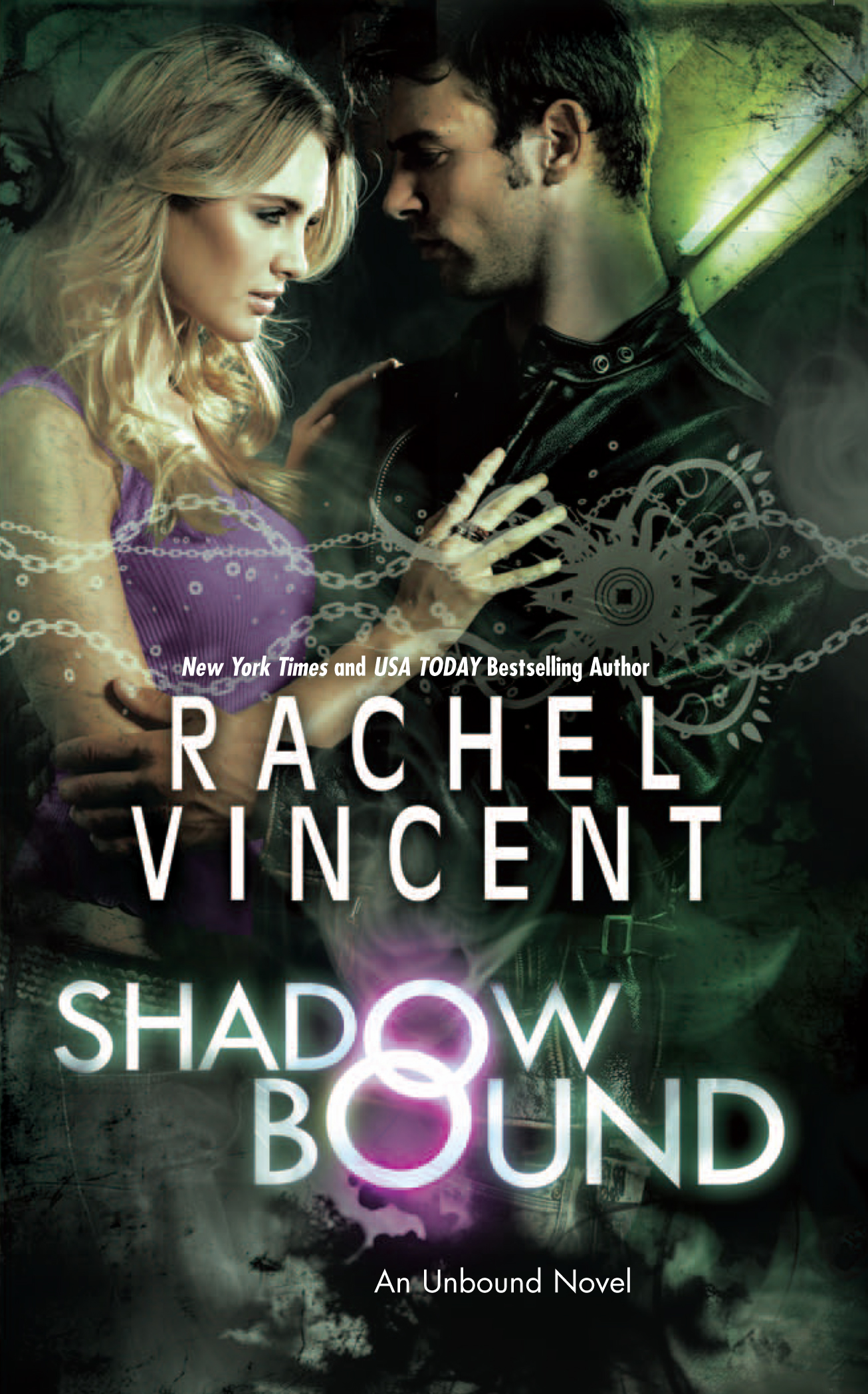
{Review} Shadow Bound by Rachel Vincent


Note: I have made every attempt to write this review free from spoilage about the first book in the series. 

It was with both trepidation and excitement that I cracked open* Shadow Bound, the second book in Rachel Vincent’s Unbound urban fantasy series.

Excitement because I adored Blood Bound, the first book in the series.

Trepidation because, well, I adored Blood Bound, the first book in the series. 

You know how it goes: When a series starts out strong, it sets the bar high. This was doubly the case with Shadow Bound because the main characters in the second book differ from those in the first. I loved Liv and Cam in Blood Bound, their story was incredibly compelling, and Kori (one of Shadow Bound’s main characters) did not impress me in the first novel. She was and unlikeable. 

However, I enjoyed Shadow Bound even more than the first book in the compelling and creative Unbound series.

Taking place in world in which some humans are (un)lucky enough to possess highly-valued abilities and mob-like syndicates rule, Shadow Bound finds Kori Daniels, a shadow walker (basically, she can transport herself and people she’s touching via darkness), suffering the consequences of her role in the events of Blood Bound. Jake Tower, leader of one of the major synidcates, has deprived Kori of the darkness she craves and subjected her to terrible torture (it’s quite painful to read, even though nothing is described in detail—it’s just so harrowing).

{Note: This review contains spoilers for the first book in this series, Raised by Wolves. If you haven’t read it, and don’t want to be spoiled, do not pass go, instead, read Sandra’s review of Raised by Wolves.}

There’s always a way around orders, a way to be the exception instead of the rule. I just needed to find it. I was going to find it.

~Bryn

Bronwyn Alessia St. Vincent Clare, better known as Bryn, returns in Jennifer Lynn Barnes’ second book in the Raised by Wolves series, Trial by Fire.

She’s proud.

She’s a fortress of strength.

She’s also the leader of her newly-formed and unusual pack, created at the end of Raised by Wolves. She’s stretched the bonds of her previous pack to find her own freedom, to forge a new and different pack while still following the rules that bind them all. With her new responsibility of alpha status, she fights to maintain her balance and dignity as the weight of her werewolf world threatens to challenge her position and deeply-held beliefs.

Bryn’s own path, a path filled with pitfalls, pain and hard, harsh lessons exacts a unique toll. It’s a tricky trail, one never forged before. Yet, she holds fast to what her heart and conscience whispers to her as truth and righteousness.

I needed to protect them, more than I needed water or air or any kinds of human connection.

Bryn’s evolving understanding of what it means to be a human leading a pack of werewolves hits relentlessly, hard and fast.

Can a Red Sox fan and a Yankees fan see past their differences and fall in love? Unbelievable or not, in the world of Shannon Stacey’s Slow Summer Kisses, this is entirely possible. 

Few writers can entice me to read a short story. Shannon Stacey is one of those few.

She expertly translates her trademark believable—and likeable—characters and fresh, contemporary writing style in the short story/novella form. I’ve read and enjoyed her previous shorts Holiday Sparks (highly recommended) and Mistletoe & Margaritas (fun!), and enjoyed them quite a bit. Despite their being short (duh), they actually were complete stories with well-developed characters. Her latest, Slow Summer Kisses, is no exception. 

Slow Summer Kisses features Anna (the Yankees fan), a recently-downsized financial executive who’s taken up residence at her grandparents’ New Hampshire lake cabin while she looks for a new job that will keep her on the same rocketous career trajectory. Her next door neighbor, Cameron (the Red Sox fan), is a bit lot surly and rather reclusive, and definitely not very appreciative of Anna disrupting his tranquility on the lakeshore. The two were childhood friends who grew apart after Anna’s family quit visiting the lake, so there’s some history between the two (yay!). Obviously, the two reconnect, but there’s some healthy conflict between the two very differing lifestyles and goals.

Can Anna slow down enough to appreciate Cameron’s laid back ways?

Can Cameron cope with Anna’s city girl pace?

Requiem Poems of the Terezin Ghetto by Paul B. JeneczkoLiterature’s power lies in its ability to bring depth, immediacy and empathy through the words and into the heart. Images of the Holocaust haunt anyone who has seen black and white reels and photographs of the horror, the reality of an era that must never be forgotten.

Paul B. Jeneczko’s Requiem Poems of the Terezin Ghetto stands as a requiem to the people who lived, suffered, endured, died and carried the inhumanity of a shameful period in their hearts and literally tattooed to their arms, a number never to be diminished.

Terezin was originally a fortress town in Czechoslovakia. Hitler and his fellow Nazis turned it into, in their euphemistic terms, a collection and transport camp for the Jewish people. The original residents were “transported” out, and the Jewish prisoners began arriving.

The Nazi regime purported that was “a home for Jewish intellectuals and artists.” In truth it was a propaganda tool for the Third Reich. In the midst of the horrors of captivity there were musical performances, lectures and other artistic endeavors.

The reality was a different tale, one of woe.

Musicians who performed beautifully one night were packed into cattle cars the next, transported to the gas chambers. [They] …played as only the heartbroken can play.

Oh, Laura Griffin, why can’t I quit you?

For real… you’d think after I went mildly ballistic over the Magical Missing Condom Syndrome in Griffin’s previous novel, Snapped* and wanted to strangle the main character in One Wrong Step (Celie is the worst main character I’ve ever read—I wanted the bad guys to kill her and leave her body in a ditch), I’d be able to make a clean break from Griffin’s books. But, oh no… a new Tracers book magically accidentally landed on my Kindle and I devoured it in a couple of evenings. 

This is my problem: I enjoyed the hell out of Laura Griffin’s Glass Sisters duology (especially the first one, Thread of Fear). Those two books were the perfect formula for awesomesauce brain candy: decently suspenseful but not too stressful, smart/tough women, smart/tough guys, an interesting setting. I also really, really enjoyed the first book in the Tracers series (which is kind of connected to the Glass Sisters series), Untraceable, because one of the main characters is a female computer hacker for good, which is incredibly badass. So, I keep reading Griffin’s books, hoping to recapture that magic.

And, a lot of those elements are there in subsequent books—plus, Griffin’s a pretty good writer.

She’s got a snappy, journalist style and doesn’t get bogged down in procedure or unnecessary details. (Do not bring details and nuance into my brain candy!) Yet, with that said, her novels still seem well-researched—more so than your average CSI episode at least. Trust me on this.

Since I have lost my stomach for a lot of mysteries in the last few years, I’ve tried a lot of the fluffy rom/suspense writers and most of them are just not at all my thing. They tend to be painfully formulatic and beyond ridiculous. (Ridiculous**, I can handle, in fact, I kind of love ridiculous—beyond that… no thanks.) 

Also, I have learned two things about Texas from Laura Griffin’s books:

  1. The state is virtually crawling with serial killers. It’s amazing anyone survives past thirty there.***
  2. The state is also virtually crawling with extremely attractive law enforcement officers.**** 

{Early Review} Something Like Normal by Trish Doller


Something Like Normal by Trish Doller

But what has been done can’t be undone. My best friend is dead and I’m never going to be the same Travis Stephenson.

Trish Doller’s remarkable debut, Something Like Normal, is one of those rare books that I recommend to nearly everyone. It’s an important, timely novel—one that’s lingered with me in the months since I read it.  

Well before SLN was published (it’s out on June 19), I found myself on seemingly every social media site insisting the everyone—absolutely everyone—read this novel about 19 year-old Marine Travis Stephenson, who’s home on leave in Florida following a tour-of-duty in Afghanistan where his best friend, Charlie, dies before his eyes. Suffering from post-traumatic stress disorder (a fact kept hidden from the Marines, as that would torpedo his military career), Travis finds himself feeling like and outsider in his own home and hometown. 

As we head toward the beach I notice the differences in the landscape of the city. New businesses that weren’t there last year. Old businesses that are gone. It’s like a whole chunk of time has just … disappeared. The songs on the radio are different. The faces on the celebrity tabloids at the airport newsstand were people I didn’t recognize. There’s even a new American fucking Idol.

I don’t believe the war is simply the work of politicians and capitalists. Oh, no, the common man is every bit as guilty.

The Holocaust is disturbing enough for adults to conceptualize, but for younger children it’s especially difficult to explain. I certainly cannot give a valid explanation beyond the usual lines that we find in history books.

However, in Anne Frank: The Anne Frank House Authorized Graphic Biography, Sid Jacobson and Ernie Colon have gifted us with a finely-illustrated and written graphic book that explores issues of intolerance and prejudice for a younger audience in an accessible way. It’s deeply felt for the the young and not-so young.

Told through the eyes of Otto Frank (Anne’s father) but still drawing upon Anne’s diary, Otto’s sad face and words come forth in a beautiful portrait of him in darkness and shadows thinking about Anne’s diary.

Painful reminiscences overwhelmed me…Never had I imagined the depths of her thoughts and feelings.


Charlotte Rogan’s much-hyped debut, The Lifeboat, is one of my biggest reading disappointments of the year. 

And I feel like a complete jackass for saying that. Rogan has a wonderful story of writing for years and years before The Lifeboat was published and in a publishing climate where precocious twenty-somethings are getting all sorts of attention, it’s wonderful to see someone’s dream of being a published novelist become a reality after years of work on her craft.

However, with its singular focus on Big Questions About Morality, I was left wanting more of everything: plot, character development, tension. 

Review: Cinnamon Rain by Emma Cameron

Cinnamon Rain by Emma Cameron

It stings—
sulphur tears
in cinnamon rain.

Emma Cameron’s Cinnamon Rain embodies the Trifecta of Awesome in my reading heart: a contemporary older YA, Novel in Verse, from Australia.

Fortunately, after a long (very, very long) wait for my order of this book from Fishpond, the Trifecta of Awesome didn’t disappoint—Cinnamon Rain is one of my stand out reads of the year. 

Cinnamon Rain interweaves the stories of three friends: Luke, Casey and Bongo (yes, Bongo—his real name is David). They live in a rural town in Australia, each hoping to escape their lives. Luke plays cricket, hangs out at the beach and pines away for Casey. Casey’s dream is to escape their town and everyone she knows, while Bongo drinks to avoid his abusive stepfather and the memories of his little brother taken away by social services. 

The whole group seems lifted
by one small success. 

Each character narrates a third of Cinnamon Rain (this seems like a more common narrative style in Australia than in the U.S. or U.K., am I right?), painting a rich picture of three lives in transition. We follow them separately out of their hometown in their first steps into adulthood. 

But somewhere in the mix,
I realise that
she’s not just running away.
Her life has focus.
I’ve got nothing.

The Name of the Star by Maureen JohnsonI love a good mystery, so when Maureen Johnson takes it to another level creating her witty and fun paranormal young adult thriller The Name of the Star, I was instantly hooked.

Aurora (who prefers Rory) Deveaux comes from Louisiana, the land of all things fantastical and magical, a place where her uncle has eight freezers filled with everything from batteries to milk intended to get him through another Hurricane Katrina (no worries about electricity going out) and an aunt who sees various angels of several hues designating their place on a spectrum from good to not-so-good. With this background, nothing should come as a surprise to Rory.

But, surprised she is.

It’s Rory’s senior year of high school. Her parents have an opportunity to teach at a university in England for a year, so off they go to a place more laden with ghosts of the past than Louisiana could ever scare up. She’s installed in Wexford, an elite prep school where she becomes embroiled in a mystery dating back to 1888: Jack the Ripper.

Living Proof, Kira Peikoff’s debut futuristic thriller, piqued my interest because it dealt with a near-future that seemed plausible and frightening. 

Set in New York City in 2027, destroying an embryo (say, for stem-cell research) is illegal and considered first degree murder. Similarly, pregnant women are monitored for any behavior that could be potentially unhealthy and a prosecuted for missing prenatal appointments or ingesting alcohol.

In this world, fertility clinics are big business, so there are many, many unused embryos in storage. Doctors are charged with preserving the embryos indefinitely and are subject to severe criminal prosecution if they are found to be negligent in their care of the embryos face prosecution while the separation of church and state has eroded almost completely, 

“I really think we are at a crucial fork in our history. The separation of church and state is breaking down all the time. First the line was blurring, and now it’s all but indistinct.” She swallowed the words that dangled from her tongue, threatening to expose her fury toward the DEFP and the DEP.

Arianna is a obstetrician with a secret—she has rapidly progressing multiple sclerosis and a connection to the radical scientific underground. Her only hope to avoid the always-fatal outcome of the type of MS she has is a stem-cell transplant, which scientists (including her father) had nearly perfected as a treatment prior to it becoming illegal. However, the Department of Embryo Preservation (DEP) is suspicious of her (they are unaware of her connection to her father’s work) because of the sudden popularity of the fertility clinic she operates, and they send in an undercover investigator (they are also motivated by threats to the department because they haven’t had a major bust in ages).