Thoughts About That YA Book Buying Study

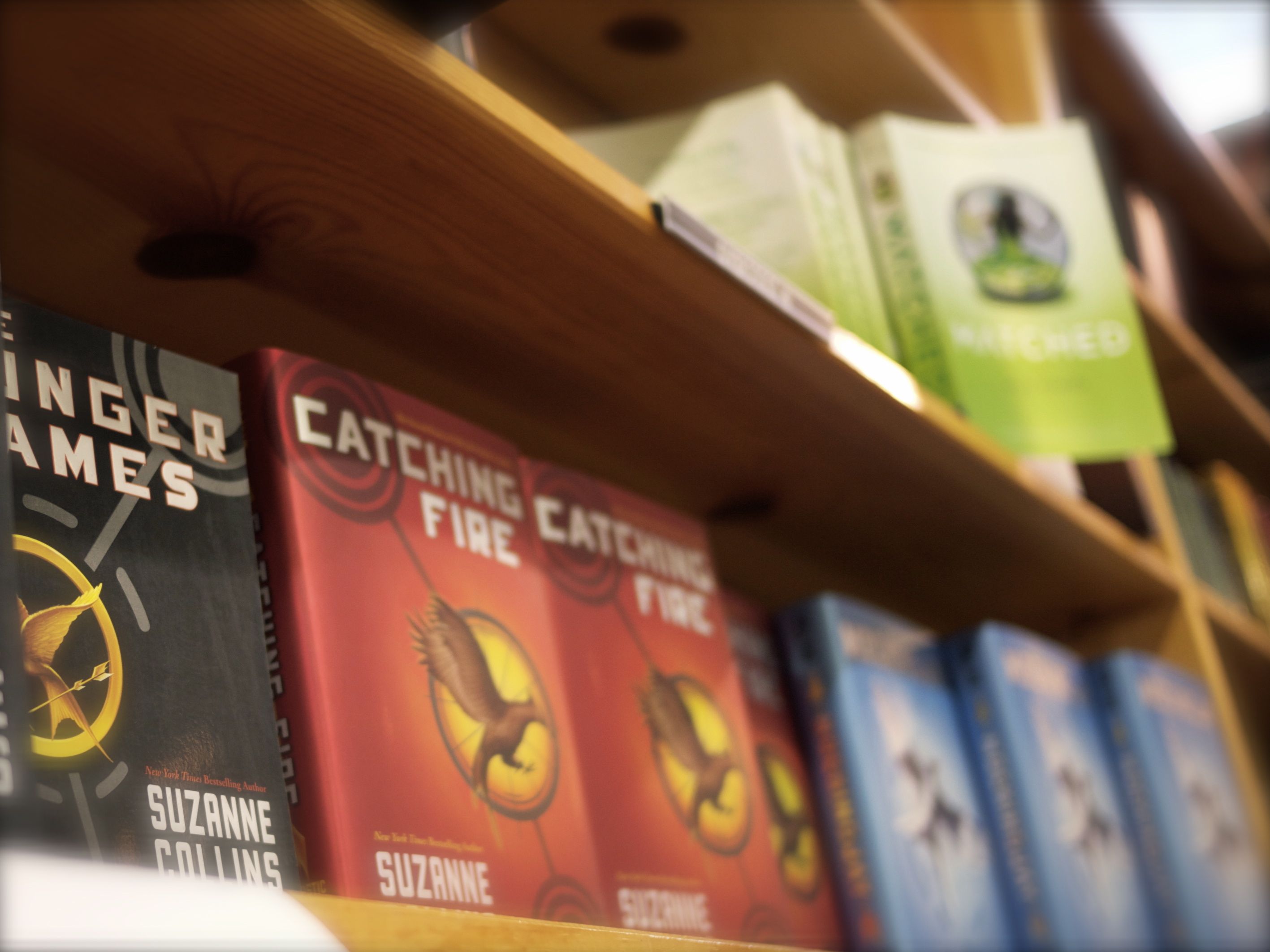
A lot of fuss has, understandably, been made over Bowker’s study about book buying trends in the young adult/teen categoryUnderstanding the Children’s Book Consumer in the Digital Age.

People seem to find the data surprising or somehow a sign of something signficiant (I’m looking at you, Atlantic Wire aka Sarah’s Daily Annoyance), but I’m not so sure. 

Most of us only have access to the report summary (hey, if someone wants to hook a girl up with the very pricey full report, I’d love to analyze it further, I kind of know my stuff re: data anaylsis*) and that summary makes two interesting points. 

  • 55 percent of buyers of books in the teen/YA category are adults (note: this does not say books, it says “buyers”); and
  • Adult YA book purchases represent 28 percent of all actual teen/YA books sold. 

Now, a lot of people have jumped on this (quite a few negatively so) 55 percent number as very significant. And, a number of high profile media outlets have confused buyers versus books sold. Hence, somehow, the inaccurate statement that adults buy the majority of YA titles has emerged, which is wholly incorrect. Teens are still buying far more young adult books that adults do, representing 72 percent of YA books sold. Basically, teens buy more YA books, per person, than adults, despite being a smaller percentage of the actual buyers of YA books.

Book Matchmaker: Roxanne Just Wants a Good Book

Y’all, I have really fallen off the book matchmaker wagon. 

You see, the last chunk of submissions (probably around twenty) have been really, really hard. Like, how the hell am I supposed to find books for Janina, who’s basically read every book? Anyway, so y’all have basically stumped the band, so to speak.

So, I went through our (massive) backlog and found a bit of a gimme—a request from one of my clients and former students, Roxanne, who’s a very cool artist and all around creative thinker. 

Roxanne filled out our handy-dandy—and extremely scientific—Book Matchmaker Questionnaire, here are her responses:

YA or Adult: Surprise Me 

Genres: Contemporary, Historical, Action/Adventure, Fantasy, Science Fiction, Paranormal, Mystery/Thriller, Magical Realism, Steampunk

Point-of-View/Narrative Style: First Person, Multiple POV, Epistolary (told wholly or partially though documents), Present Tense, Male POV, Main Character or Narrator, Female POV, Main Character or Narrator, Unreliable Narrator

Likes: “Bathtub mysteries that actually surprise me. Well done and documented historical (and hysterical) fiction. Learn-read ie. ” “How To Think Like Leonardo DaVinci.” “Coming of age or narrative memoir.  Metaphysical or energy themes. Promotion of hope.

Dislikes: “When I read, I try not to think that hard, Sarah. I basically like to read well written material across any genre. I’m totally annoyed by lazy authors.”

Swoon Factor: 3

Gross-out Factor: 1

Smut Factor: 1

 Fluff Factor: 3

The Results

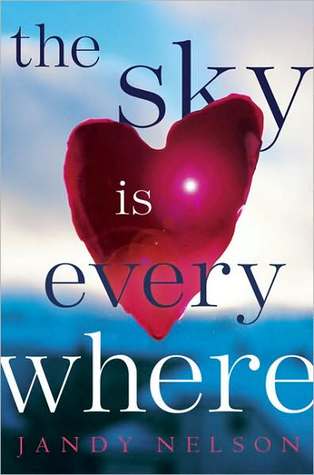
The Sky is Everywhere by Jandy Nelson

The Sky is Everywhere by Jandy Nelson

I’ve never once thought about the interpretative, the storytelling aspect of life, of my life. I always felt like I was in a story, yes, but not like I was the author of it, or like I had any say in its telling whatsoever. You can tell your story any way you damn well please. It’s your solo.

The Sky is Everywhere is an odd book—people seem to have extreme reactions to it. I love it. It’s got a touch of magical realism but it’s also very accessible and has a strong theme of hopefulness. 

{Amazon | Goodreads}

List-O-Rama: 4 New Fall Television Shows That Might Not Suck

You may have noticed that we kind of love television around here. And, no, there’s nothing incongruous in liking both books and television—I swear. Stories are awesome in any medium.

I was perusing my beloved Entertainment Weekly on Friday (yay! my mailman didn’t “borrow it” this week) and while most everything looks atrocious (I’m looking at you New Matthew Perry “Comedy”), a few of the shows piqued my interest.

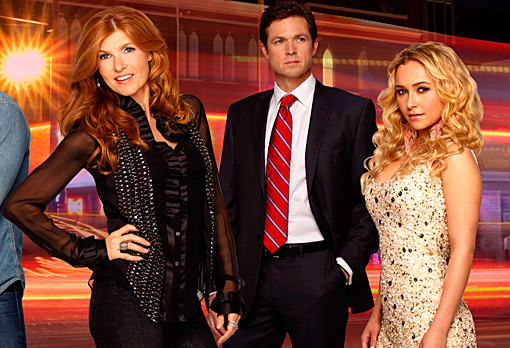
image via EW via ABC

Nashville - ABC, Wednesday at 10:00p.m.

I’ll be honest, I didn’t really even understand what this show was about before I added it to this list, but it’s starring Tami Taylor, so I’ll watch it regardless. But, it’s gotten really good buzz and sounds like it’ll be a pretty interesting show. Whatshername from Heroes plays an evil Taylor Swift-type, so what could go wrong? 


Review: Point of Retreat by Colleen Hoover

Despite that Colleen Hoover’s Slammed was a frustrating read, there was a part of me that found it strangely readable and enjoyable. Unfortunately, I cannot say the same for its wholly unnecessary sequel, Point of Retreat.

Point of Retreat picks up where Slammed left off. Frankly, I was surprised to learn that there was a sequel, since the original novel ties up most of the loose ends and put the characters on a path toward happiness, despite the challenges they faced in the first novel. Despite my reservations about Slammed, I was intrigued about where Hoover would take these characters as they tackled their new independence, responsibilities and burgeoning relationship. 

In Point of Retreat, Will and Layken find themselves embroiled in even more drama, but the core of the story is two-fold:

  1. Will they ever actually have sex? *eye roll*
  2. Will Will’s evil ex-girlfriend destroy their happiness? *eye roll*

[Note: Please do not continue to read this review, should you plan on reading Slammed and want to remain unspoiled.]

[Seriously, if you don’t want to be spoiled for Slammed, don’t keep reading, okay?]

The first—no sex for a year—is absolutely absurd.

Why I E-Read

I couldn’t care less how people read. Hardcover, paperback, Kindle, Nook, iPad, whatever… I don’t care. Hell, you can read your books etched in stones if you want. (Though I question the practicality of that particular format, for both portability and storage reasons.)

As I’ve mentioned a time or a thousand, all I care about is encouraging people to read. The how or what is far less important to me.

However, a whole lot of people do care about the manner in which people consume books.

Jonathan Franzen and his cronies, for example, have stated that “serious readers” don’t read digitally. Other people have accused digital readers of heading to their Kindles or Nooks because they want to hide what they’re reading. Sometimes I can’t help but feel that I’m perceived as a less-serious reader or a traitor to “book culture” because I prefer a digital format, and honestly, that really bothers me. 

Whenever I come across another sweeping statement—which happens at least once a week—about people’s reading format preferences, I get my feathers ruffled. (The same feather-ruffling happens when 20-something digital natives accuse folks who prefer paper of being Luddites. Choice is a good thing—which is also why I think the possibility of print-on-demand is very intriguing.) 

In the effort of doing my little part of thwart the sweeping, inaccurate statements that pepper the web about the way people choose to consume books, I thought I’d delve a bit more into issues related to ereading and digital “stuff” (i.e., digital design, etc) in general, since I spend much of my time embedded in a digital environment and am an avid e-reader. I’ll start with talking about why I elect to primarily e-read. Contrary to the popular commentary, it has absolutely nothing to do with being embarrassed by what I read—instead, it involves a lot of factors, both sheer preference and the practical.

List-O-Rama: 5 Book-Related Trends I Wish Would Stop, Stop Right Now

It’s amazing when you start paying attention, how many publishing and book-related things are straight-up annoying after awhile. Some of these are plot devices, some are publishing-related, but they all annoy me and need to stop, stop right now. 

Photo by Sarah.

Delayed Ebook Releases

Okay, I get it. Publishers hold back the ebook releases so their books have a better shot at the bestseller lists. However, as a reader I don’t really care. If a book has a publish date of, say, June 1, I expect to be able to by either the paper book or digital version on that date. Don’t make me wait an extra week or two. This happened a lot with mass market paperbacks this summer and I cannot tell you how irriating it is when publishers (or anyone) make it hard for me to give them money. I can only speak for myself, but this doesn’t make me rush out and buy the paper book instead of the ebook—instead, it means I often forget to buy the ebook when it’s released the following week.

On the other hand, one of the things I’ve been most impressed with from publishers lately is Simon Pulse releasing several books simultaneously as hardcovers, paperbacks and ebooks—letting reader choose what works best for them is smart.

I was curious about Colleen Hoover’s Slammed after I saw Tammara Webber (whose book Easy, I very much enjoyed) raving about it and then it subsequently landed on the ebook bestseller list. However, I tend to shy away from self-published books* unless they’re by an author I’m familiar with or it’s a book that’s been recommended by a reader whose taste I trust. 

Once Atria (a Simon & Schuster imprint who’s seemingly buying every popular self-published novel) purchased Slammed and reissued it, my curiosity resurfaced. 

Slammed begins with high school senior Layken (yes, there are weird names in this book, and yes, Layken sometimes goes by “Lake”) moving from Texas to Michigan with her mother and brother, following the sudden death of her father. Naturally, she meets the 21-year old hottie across the street, Will, immediately after she pulls the moving truck into the driveway. They go out on one date—a pretty strange date—that includes homemade sandwiches, little personal information exchanged and a visit to a slam poetry event. 

We both finish our sandwiches, and I put the trash back in the bag and place it in the backseat. I try to think of something to say to break the silence, so I ask him about his family. “What are your parents like?”

He takes a deep breath and slowly exhales, almost like I’ve asked the wrong thing. “I’m not big on small talk, Lake. We can figure all that out later. Let’s make this drive interesting.” He winks at me and relaxes further into his seat.

(I actually thought Will was kidnapping Layken when I read this—thankfully, they just went to a poetry slam.)

The poetry slams like the one the pair goes to on their first date are probably the strongest element of Slammed, creating an interesting backdrop for Will and Layken’s story. Hoover does a nice job of capturing why this expressive form of spoken-word performance would so grip people, especially teens. 

Review: Riveted by Meljean Brook

But she wasn’t on another ship—and instead of a bird shitting in his eye at the port gates, an answer to an old prayer had landed in his lap in the form of a vibrant woman. Such mad luck.

Riveted by Meljean Brook

Iceland! Monocles! Vulcanologists!

Riveted, the third installment in Meljean Brook’s Iron Seas series, has a lot of appeal on the surface, but its real richness is the layered, complex exploration of identity against the backdrop of a skillfully-developed steampunk world. 

I wasn’t a fan of the first book in this series, The Iron Duke. (Laura’s review echoes my sentiments.) However, I was extremely impressed by the world-building, which led me to try the first steampunk novel I’ve truly enjoyed, Heart of Steel (which has one of the worst covers in the history of bad covers). Heart of Steel was just pure fun, a wholly entertaining classic adventure tale. 

In Riveted, Brook takes readers to another part of the Iron Seas world: Iceland. A volcanic eruption caused Icelanders to evacuate the island a century prior, but legends about witches and trolls still inhabiting the island abound.

A century before, in the years following an eight-month fissure eruption, the Mist Terrors decimated livestock and crops. Ash fell in thick layers over the land, and toxic volcanic gases poisoned half the island’s inhabitants. The remaining population had been forced to flee or face starvation. Except for a few ports and fishing villages, Iceland had been abandoned for a hundred years.

However, the mythical creatures of abandoned Iceland are actually the work of Icelanders who secretly remained—a colony of women who will do anything to keep their village hidden from outsiders.

Annika grew up in that village of women (who primarily, but not exclusively, are lesbians or bisexual—there’s a very fluid sort of sexuality in this community) and left in search of her beloved sister Kalla, who was exiled for endangering the community. She facilitates her search for Kalla by working in the engine room of an airship, looking for her at their ports of call. 

Annika encounters David at one of those ports, where he is preparing to board her airship en route to an expedition. He’s a vulcanologist (that’s the study of volcanoes, y’all—what a badass job), but he’s also hell-bent on finding his mother’s home (in Iceland) so he can bury her runes, which he carried with him for 20 years. David has two prosthetic legs, a prosthesis for a hand and a monocle-type lens embedded in one eye.

Disabled during a terrible accident, David eventually had the metal prostheses grafted onto his body, meaning that he’s also infected with the nanoagents introduced to the Old World by the Horde to control the populations (much of the story behind the nanoagents is addressed in The Iron Duke, but it’s also discussed on the author’s website); the nanoagent infection means that he is also unwelcome in many parts of the New World. He is part-indigenous and has a number of facial scars, in addition to being significantly differently-bodied (for lack of a better term), so despite David’s skills as a naturalist, people generally avoid him. 

David’s interest in Annika is piqued because, despite that she claims that she’s Norwegian, her recognizes her accent as the same as his late mother’s—and he thinks Annika will be able to give him information about where to bury his mother’s runes. 

These two characters are fascinating because David and Annika have both defined themselves by how they are perceived by others. 

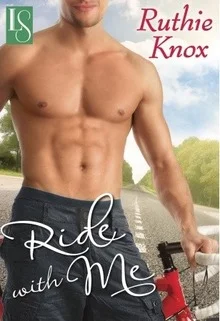
Joint Review: Ride With Me by Ruthie Knox

Ride With Me by Ruthie Knoxa joint review by Sarah & Rebeca aka Renegade

After Rebeca discovered Ruthie Knox with About That Night, which charmed us both, Racquel from The Book Barbies insisted that we read Ruthie’s other book, Ride With Me. Our arms were twisted, so we had a little Clear Eyes, Full Shelves readalong. 

Ride With Me is, in a lot of ways, a classic road trip/oil and water type of book, except it’s set against the backdrop of an epic bike ride across the U.S. Lexie places an ad for someone to cycle with her, and winds up with Tom, whose sister answered her ad on his behalf, unbeknownst to him. The two clash, as Lexie’s by-the-rules personality and Tom’s laissez faire approach make for amusing cycling companions against the backdrop of their cross-country cycling tour.

On the Plot

Sarah: I love that this is a road trip novel. I mean, they’re on bikes, which doesn’t sound too fun to me because of the whole sore ass thing, but hell, yeah roadtrips. Throw in the bonus of the opposites-attract trope, and I’m sold. I don’t know how creative Ride With Me’s plot is at its core (there are a lot of tried and true plot devices), but it feels fresh and fun regardless. And, I thought the bike ride made for a great backdrop—there’s something about the pursuit of something physically challenging that works for me when it’s done well. Yay sports and all that. 

Rebeca: I’m not a big biking fan either, but reading this book made me want to try this route out myself. Knox does a good job of conveying the feel of the country. Hillsborough even made an appearance for one of the best scenes, the hot-sauce challenge. I bought the need for these two clashing personalities to stick together despite their disagreements. Sparks were a natural result of this forced intimacy, setting the stage for a really fun story.

Sarah: I am, however, not convinced as to how realistic Tom’s, uh, “prowess,” would be after all that bike riding. Yeah, I’m talking about this.

Rebeca: The first time you shared that article I had to leave the room. My DAD rides his bike to-and-from work every day. Eww.

Review: Naoko by Keigo Higashino

Naoko by Keigo Higashino

Imagine Hamlet’s unbelievable experience. He’s suffering. He’s lost his father. He’s cringing at his mother’s too-soon marriage to his uncle.

Into this scene walks the ghost of Hamlet’s father telling him that horror upon horrors his brother, the uncle-now-stepfather, dealt him. His brother murdered him and married his wife thus revenge must be taken. There stand Horatio and Hamlet in the mists of a winter’s night after the ghost has faded away.

Horatio: O day and night, but this is wondrous strange!
Hamlet: And therefore as a stranger give it welcome.
There are more things in heaven and earth, Horatio,
Than are dreamt of in your philosophy.

“Wondrous strange” like Hamlet is Naoko, Keigo Higashino’s novel of a father, mother and daughter. To bring Shakespearean language into more familiar terms, I’d say it’s weirdly troubling, supernaturally implausible and unusually odd, verging on repugnant.

Heisuke Sugita lived a simple life filled with love for his dear wife Naoko and sweet daughter Monomi until a tragic accident takes Naoko’s life and leaves Monomi in a coma. When the bus his wife and daughter rode in crashed, the mother threw herself upon her daughter thus saving her  life. When Monomi comes out of her coma, she is confused. She speaks with her mother’s mind, thoughts and memories. A transference at the time of Naoko’s death occurred from one to the other wherein the mother’s soul lives in strange harmony with her eleven year old daughter. Monomi can function in her youthful world as well as her mother’s domestic life.

In this tale of love, passion and sorrow there are mystifying occurrences.

List-O-Rama: Authors I Heart, Romance Specialists Edition

For the next installment in the series about my favorite authors, I thought I’d write about some of my favorite Romance writers.
These three authors all have specialties, ranging from novels set in Australia to books about spies. They’re not unlike Ocean’s Eleven, each with an expertise in something unique. I picture them dressed in black with Batman-style utility belts, prepared for anything.

Karina Bliss

Karina Bliss

Her expression shut faster than a poked clam. “I’ll just get a cardigan.”

He might not be a hellraiser anymore but Devin valued his reputation. “Haven’t you got anything sexy?”

“Yes,” said Rachel, “my mind.”

I  own every single Karina Bliss book. I have shelled out for them all. As I’ve mentioned before, I  will continue to do so until one of us dies—this commitment is that serious. That pretty much sums it up.

Bliss specializes in contemporary category  romance set in her native New Zealand and Australia. Her books  are consistently engaging and- dare I say it- heartwarming. I’ve already  mentioned Bring Him Home and What the Librarian Did (here and here)  but next up would probably be Mr. Unforgettable. The plot centers around Liz, the mayor of a small beach community, and Luke, a retired Olympic swimmer. Liz is slowly recovering from the death of her late husband, trying to redefine her identity. She’s thrown into contact with Luke in his attempt to found a camp for underprivileged kids. Their journeys from difficult childhoods to happiness become inextricably intertwined.

Note: those of you who  understandably dislike Alpha Male Syndrome should probably avoid Like Father, Like Son.

List-O-Rama: Three More Dealbreakers

Zeppelin-ramp de Hindenburg / Hindenburg zeppelin disaster

Apparently, I’m a very picky reader, because since posting my list of book dealbreakers, I discovered that there are a few more common book occurrences that drive me abso-freaking-lutely bonkers.*

It’s funny, though, because I didn’t consciously realize how much any of these things bothered me until I started looking through my notes in my Kindle clippings file and noticed that I kept noting the same plot-related details over and over again in three years worth of clippings. 

Animal death as a plot device.

I’m a big-time animal lover. I love my dogs like my family. So, when animal death is used as a plot device, particularly death of a beloved pet—but really any story with the animal death (or injury) as a plot device, I instantly feel manipulated and it completely pulls me out of the story. I’m at the point, where if a book intrigues me and I see that an animal plays an important role, I will Google for spoilers so I can decide if I can handle the story and the inevitable animal death (seriously, being an animal in a novel is pretty much a death sentence).

Sometimes, a book is strong enough that this plot device won’t kill the deal for me (I recently read an ARC of an upcoming contemporary YA that I loved and an animal death snuck up on me, but the rest of the story made it a very solid, recommended read regardless), but it will completely ruin a “bubble book” for me.

True Blood Snark-Cap - Season Five Finale/Season Wrap-Up

Dear True Blood, 

I’m sorry, but I think we need to break up.

You see, it’s not me—it’s you.

I just wasted an entire summer of Sunday evenings watching and—oh, horror!—recapping the suckfest of your fifth season. All of that for only one awesome thing.

Pam’s hair.

And as fabulous as Pam’s hair is, it’s not enough to carry an entire television show. 

Mini Reviews: Three Contemporary YAs

I’ve had semi-written drafts of reviews of three contemporary YA novels sitting in the queue for ages. Ages as in months.

So, I thought I’d just admit that I’m not going to be able to write one of my patented epically long reviews for every book, and instead pass along my thoughts of three contemporary young adult novels I read and enjoyed this summer. 

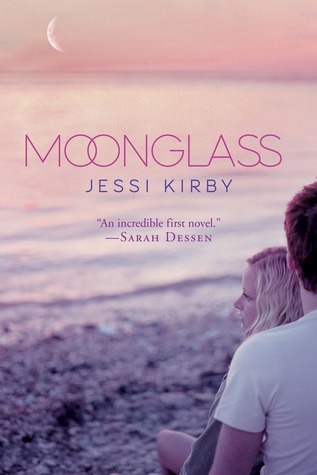
Moonglass by Jessi Kirby

I read once that water is a symbol for emotions. And for a while now I’ve thought maybe my mother drowned in both.

I wasn’t as in love with Jessi Kirby’s 2012 release, In Honor, as I hoped I would be, but even though I wasn’t swept away by that story, I thoroughly enjoyed the writing. So, when I spotted her debut, Moonglass, deeply discounted, I snapped it up and absolutely loved it. This novel has that same quality of Melissa Walker, Sarah Ockler or Sarah Dessen—it’s a gentle little story featuring relatable characters and a subdued style. (This is such a refreshing contrast to the high drama that’s so trendy in contemporary YAs this year.) While the themes are heavy (the main character’s mother killed herself), it never feels HEAVY.

Moonglass stands out among the many grief/loss YA novels for a number of reasons, but firstly because the death occurs well before the book’s opening, making the story very much about Anna, the main character, finding herself and figuring out where the loss of her mother at such a young age fits into how she is. There’s a very lightweight romance that progresses in a natural way, and it takes place in a swoon-worthy California beach community that absolutely comes alive, despite the novel’s short length. (Yes, a setting can be swoon-worthy.) 

My only issue with this book is that the symbolism felt a bit over-the-top, but it’s also executed quite well, so that’s more of a personal preference than something that will bother most people. 

{Buy it at Amazon | BN | iBooks | Book Depo}

{Add it on Goodreads}

Twofer Review: The Devotion of Suspect X + Salvation of a Saint by Keigo Higashino

The Devotion of Suspect XI confess my addiction to books shrouded in mystery and intrigue. I trace  the seeds of said obsession to my early years when I would hide under my quilt with a flashlight to continue reading without parental interference.

To hell with sleep when there’s a good mystery unfolding before me.

I admit I can be lax when it comes to quality. Just give me a thriller or mystery and I’m happy as long as there’s some suspense and a bit of fuel for the imagination—and a really, really good one (i.e., Tana French’s Dublin Murder Squad series) is a real treasure.

Sarah received a review copy of one of Keigo Higashino’s books translated from Japanese into English a few weeks ago (Salvation of a Saint, out in October). Knowing my passion for the genre, she passed it to me to read. Thank you, Sarah! This one was a keeper, which led me to purchase another Higashino book, The Devotion of Suspect X.

Keigo Higashino’s The Devotion of Suspect X and Salvation of a Saint both had me beguiled from the first sentences to the final pages.

Not only beguiled, but unable to develop my theory or suspect for the murders that occur in both novels. And given that I am very adept at solving mysteries, thanks to my study of all of the Nancy Drew canon, this is unusual.

List-O-Rama: Authors I Heart, YA Edition

Editor’s Note: This is the first in a series of posts from our Official Romance Correspondent, Rebeca aka Renegade, who’s shining a light on her favorite authors.

There are a few authors I am completely, unwaveringly, loyal to. They have earned my trust with a slew of wonderful books, becoming beloved in their own right.

No one’s perfect, but I’ve found something to enjoy in most, if not all, of their books. I’ve written up a few of my favorite YA (and Middle Readers and Children’s) authors to start things off.  These are important names, so I’ll show you mine if you show me yours, okay?

Sarah Dessen 

I knew, in the silence that followed, that anything could happen here.  It might be too late: again, I might have missed my chance. But I would  at least know I tried, that I took my heart and extended my hand,  whatever the outcome.

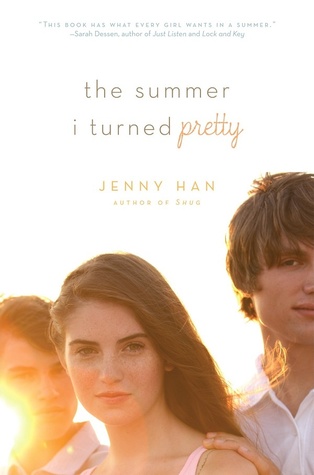
Series Review: The "Summer Series" by Jenny Han

The Summer I Turned Pretty by Jenny HanIn my post yesterday, I mentioned that I’ve been reading as many summery novels as I can find. Naturally, I had to check out Jenny Han’s popular “Summer” books about three teenagers who spend each summer together at a beach house. 

I realize I’m probably the last person on the planet to read this series, and I blew through all three books in 24 hours, so I understand why people find them so unputdownable—there’s just something about these books that make you want to keep on reading. 

(Incidentally, since this is a series review, I’m going to be intentionally vague, so as to not ruin the books.)

In the first book, The Summer I Turned Pretty, Belly (Isabelle) returns with her mother and brother to Cousins Beach, where their family friends own a beach house. Now that she’s older, and as the title implies, prettier, she’s hoping to capture the attention of her long-term crush, Conrad, the eldest son of her mom’s best friend, Susannah. She’s also excited to reconnect with her good friend, Conrad’s younger brother, Jeremiah. 

I’d nursed a crush on Conrad for whole school years. I could survive for months, years, on a crush. It was like food. It could sustain me. If Conrad was mine, there was no way I’d break up with him over a summer—or a school year, for that matter.

The Summer I Turned Pretty is the novel in the series I connected with the most.

One of the wonderful things about the Summer books is that they feel very timeless. A lot of books featuring teen characters read in a way that I often wonder if they’ll be dated rather quickly. These books, and particularly the first one, made me feel nostalgic for summer fun as a teenager (and I hated being a teenager!). While I never was so lucky as to spend entire summers at the beach (that’s pretty much my dream), the sense of summer, where the days drift away amidst sun and sand was really wonderful. 

I was sitting on the La-Z-Boy reading Emma—mostly because I thought it made me look smart, not really because I enjoyed it. If I was reading for real, I would be locked in my room with Flowers in the Attic or something and not Jane Austen.

One of my favorite aspects of The Summer I Turned Pretty are the flashbacks relating the backstory and dynamics between the characters. We see them as kids each summer and how the dynamics between these “summer friends” evolved. Being the youngest, Belly is always hoping to be included with the boys, but often finding herself left out, pining away for Conrad. 

And this is the point at which I’m morally obligated to disclose something about the Summer books: there’s a love triangle.

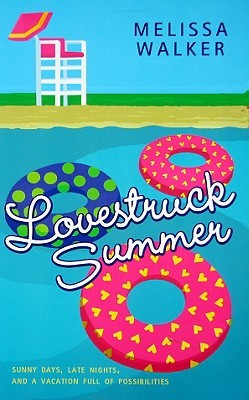
Review: Lovestruck Summer by Melissa Walker

“I know what I like,” I say. “It’s a certain type of music and I’m just not into stuff like bluegrass and banjos.”

“Music is music, Priscilla,” says Russ. “If you love music, you give it all a listen. You see what there is to learn in every song you hear. You take chances on shows. That’s part of it.”

I’ve been just dying for a great summer-themed read, so a couple of weeks ago I blew though five or six books I hoped would fit the bill. Among those books was Melissa Walker’s 2009 novel, Lovestruck Summer, which was exactly what I was hoping to find and earned itself a spot as a summer read I’ll definitely revisit. 

Don’t let the cutesy cover fool you. Lovestruck Summer has quite a bit of meat to it with excellent, believable character development—as well as some very smart humor—and most definitely fits into the spectrum of older-YA/”new adult” that’s becoming so popular right now.

Quinn (who’s real name is Priscilla, but no one had better call her that) has just graduated from high school in North Carolina when, on a whim, she calls her favorite record label at 3:00 a.m and asks for a summer internship. To her surprise, the label agrees, which means she’ll be spending the summer in America’s live music capital, Austin, Texas. 

Quinn finds herself living with her super sorority girl cousin, Penny, a UT student who has a bedroom and wardrobe for her dog, and whose next-door neighbors include Russ, a 21 year-old cowboy/frat boy combo (think Matt Saracen if he drove Tim Riggins’ truck) who loves country music and annoys the hell out of Quinn. She often “escapes under her headphones” because these people are so different, and Quinn doesn’t know how to cope with the Bachelor marathons and pop-country that are the soundtrack of her cousin’s apartment.

I tug on Penny’s arm. “I hate country music,” I whisper through clenched teeth.

“What?” she asks, clapping her hands to the beat and hardly turning around. “I hate country music!” I shout, way too loudly. The back half of the restaurant turns to scowl at me.

True Blood Snark-Cap - Episode 5.10: Gone, Gone, Gone

Guys… I am so sorry! I literally (literally literally, not figuratively literally) forgot to watch True Blood this week. So, this snark-cap is late.

You know what makes True Blood seem particularly stupid? If you watch three episodes of Friday Night Lights after watching this week’s episode of True Blood. That’s exactly what I did—and, boy, that was a mistake. It hit me: there is absolutely no character development on True Blood anymore. I mean, there was never a ton, since it’s a soapy smutfest, but at least in the first few seasons Sookie & Co changed and were kind of interesting. 

So, I thought I’d recap this week’s show in pictures…

Some dude in Bon Temps got turned into a vampire and Sookie staked him with chopsticks, in possibly her most resourceful moment on the show.

And, like all vampire chopstick-slayings, it was messy.

Very messy.

Bill’s still staking people with the handy-dandy iStake App. (Available in the App Store, I’m sure.) 

Review: Heist Society by Ally Carter

I trace my love of mysteries back to my pre-teen years when I discovered the oh-so clever Nancy Drew. She brought the world of imagination and adventure into a mind ripe and ready for a gutsy, vibrant detective who had her own sports car and didn’t have space in her life for punks, aka criminals.

So, when I read the synopsis of Ally Carter’s Heist Society I thought,

All right! This one’s perfect for me.

Unfortunately, Heist Society didn’t satify my craving for a fun teen mystery/caper, although it was somewhat entertaining.

I admit I’m giving a bare-bones plot here, but it goes like this: Katrina aka “Kat” Bishop enters the world of high stakes theft at the age of three when her parents take her to the Louvre. This trip is not for cultural reasons, unless casing a place comes under the designation of art appreciation—instead, it’s to case the joint. A few years pass and her seventh birthday comes around. This bright and felonious fingered kid travels with her uncle to steal the Crown Jewels.

By the time she’s fifteen, she wants out. She pulls off an impressive, hopefully last, scam to turn her life into something like normal. She schemes her way into the best boarding school in the country. All right then. It’s time to leave the legacy of her family’s business behind. 

The setting: Colgan School, with its perfect grounds and finely manicured world is a place where most of the senior class has its sights set on Ivy league schools.