Links + Things: Viola Davis on 'Beautiful Creatures,' Sex and YA, Perfectionism, Connie Britton + More

Links

I’m going to be confident and bold and say I like it because, listen, I understand and I respect the book and I think the book is wonderful but this is 2013 and I think that when black people are woven into the lives of characters in 2013, then I think they play other roles than maids. I think that that needs to be explored and I hope that the audience is willing to suspend their disbelief and embrace what Richard LaGravenese has given them.

I enjoyed the first two Beautiful Creatures books (I put the series on hold until the last book came out and just haven't gotten caught up yet), but one of the big things that made them 3-star reads for me as opposed to 4-stars was the stereotypical role the authors chose to place Alma, who's an important character to the story. I love that the move creators recognized that this character has so much more potential than the book gave her and this news makes me more excited to see the movie adaptation. 

I Love... Book Blogs

In honor of Valentines Day I thought I'd write about something I really love: a good book blog.

IMAGE BY MARIA REYES-MCDAVIS - CREATIVE COMMONS LICENSED

One of the main arguments against book blogs is the variable quality of their writing. Traditionally published reviews generally get a more thorough editing and a news-outlet's stamp of approval, while blogs can be more hit or miss, without any editors at all. This system can make for inconsistent quality, but to dismiss the entire idea because of a few typos (or cheerleader-y reviews) would be foolish. Honing in on good-quality blogs that hold themselves to high standards (like Clear Eyes, Full Shelves *ahem*) means getting the quality writing while taking advantage of all the benefits of a blog.

One of the reasons I prefer book reviews on blogs to those in newspapers/magazines/trade publications/etcetera is the community available online.

I can start a conversation about an online review, share my own feedback, or ask questions of the reviewer. Basically, blogs provide us with communities and the chance to interact with other readers. Book reviews transform from individual opinion pieces into ongoing conversations with multiple perspectives.

I Love... Tiger Eyes by Judy Blume

Everyone has a first love.

Book love, that is. 

You know what I mean. It's that book that you had to buy a second copy of because you wore out your original. The one with passages you can still recite by heart. The one that makes you squeal like a crazy person when you find someone else who loves it just as much as you do. It's the one that shatters your soul when you see anything but rave reviews for it on Goodreads.

For me, that first book love was Judy Blume's Tiger Eyes.

Tiger Eyes is the single most influential book of my life. I first picked up a raged copy for--and I remember this as clearly as if it were yesterday--50 cents at Powell's Books at the old Beaverton location. It was the summer between by freshman and sophomore years of high school.

I'd read most of the typical Judy Blume books a few years previously, but not this one, which I managed to overlook at my public library. (It's possible that my conservative hometown's library didn't even have this oft-banned book, or that it was shelved in the adult fiction so sixth-grade Sarah didn't have a chance to discover it along with Are You There, God? It's Me, Margaret.)

Tiger Eyes set the stage for my lifelong love affair with quiet, character-driven contemporary fiction.

I Love... Book Club

Dear Portland “FYA” Book Club,

I <3 you.

Our meetings are my favorite event every month. I’m not exaggerating one bit. If I only got to see my husband and cat/Kindle stand once a month, you might have some competition, but since I see them every day, there’s no contest. 

I know it seems like perhaps you are not a priority since I have a tendency to begin reading the monthly selection only four hours before the meeting is scheduled to begin. But truly, there is nothing else on my calendar each month that I prioritize more. 

I love that every time we meet, we have avid, enlightening exchanges about anything and everything having to do with reading culture, including all sorts of books that Sarah generously keeps track of in her ever-handy notebook, publishing, and book stores, along with banter on Very Important topics such as Justin Timberlake and The Vampire Diaries. 

I love that our gatherings run so long and late that those of us who are married often feel compelled to bring home dinner, chocolate bourbon hazelnut pie, and/or a Dairy Queen blizzard for our wonderful, understanding husbands.

I love that when Sarah and I decided to subvert our FYA overlords due to their political selection of unappealing books, you were all on board with our coup.

I love that no one considered not meeting during the craziness of the holiday season, which was a possibility that I actually stressed out about beforehand due to my overly anxious tendencies.

Most of all, I love that all y’all seem to love book club as much as I do.

Links + Things: NPR examines publishing, all digital libraries, book clubs take over a casino and more!

Traditional publishing versus self publishing! A book club extravaganza! All digital libraries! Amazon coins! (Huh?)

All that plus cheap brain candy and some other bargain book goodness in this installment of Links + Things.

"What has changed in a really exciting way is the ways you can get people's attention. It used to be one book review at a time, a daily review, maybe you get into Time magazine. Now there's, with the Internet, this giant echo chamber. Anything good that happens, any genuine excitement that a book elicits can be amplified and repeated and streamed and forwarded and linked in a way that excitement spreads more quickly and universally than ever before. And what I'm seeing is that really wonderful books — the books that people get genuinely excited about because they change their lives, they give them new ideas — those books can travel faster, go further, sell more copies sooner than ever before. It's just energized the whole business in a thrilling way."

...traditional publishers are in the business of not publishing books but of selling books. And there's a big difference there. So they seek to acquire books and authors who they think have the greatest commercial potential. But the challenge here is they really don't know which books are going to go on to become bestsellers. Only readers know that.

Laura pointed me to this two-part series on NPR this week about self-publishing versus traditional publishing. The traditional publishing side is representing by the incoming CEO of Hachette while the Smashwords CEO makes the case for the supremacy of self-publishing. Both have an agenda, but it's interesting that both are so enthusiastic about the future of publishing and its potential. It's a nice contrast to the doom and gloom stories we hear so often.

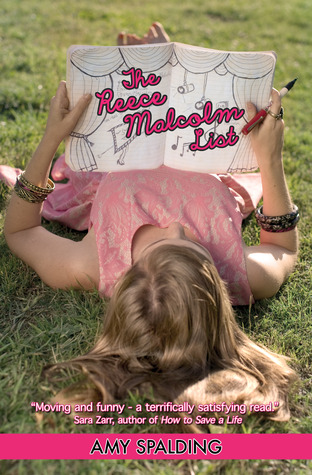
Review: The Reece Malcolm List by Amy Spalding

We walk outside to the parking lot. Sunshine and blue skies. Again. I open my mouth to let her know about the name mistake, except that I really like the thought of being Devan Malcolm. And if I tell her, she’ll call up New City, get it fixed, and I’ll have to go back to being Devan Mitchell. And suddenly she’s the last person I want to be.

When just the right book comes along at just the right time, it's a real treat. Such is the case of Amy Spalding's debut, The Reece Malcolm List, which ticked so very many of my want-to-read boxes. 

Devan Mitchell finds herself suddenly thrust into an unfamiliar world when she's shipped to Los Angeles from a small town near St. Louis to live with the mother she never knew following the death of her father. Devan knew very little about her mother, aside from that she's a best-selling novelist who seemingly never had an interest in a relationship with her daughter.

When she arrives in L.A., Devan's world transforms. Always an accomplished singing and hardcore musical theater fan, she's enrolled in a private performing arts high school where rather than being the weird musical girl, she's kind of, well,normal

Devan chronicles the little bits of information she learns about her unusual mother in a notebook, while navigating her new, vibrant world. There's a bit of romance and a lot of unusual and realistic family issues explored in this memorable debut with a knock-out authentic teen voice. 

If I were to make a Devan-style list about The Reece Malcolm List, my review would look something like this...

Things I Love About The Reece Malcolm List

Novel in Verse Week 2013

Remember last year when we bombarded you with a week of posts about the awesomeness of novels in verse?

This year, we're hoping to make it bigger and better and awesomer!

Like last year, 2013's will be that last week in April, beginning on April 21. We'll be posting features about verse novels and their authors, but some folks have also reached out to us and asked if they could get involved. (It is so weird to me that people want to collaborate with us, but it's also extremely awesome.)

Reading Rights + Wrongs: Interpretation, Point-of-View and Other Complicated Things

“They belong to their readers now, which is a great thing–because the books are more powerful in the hands of my readers than they could ever be in my hands.”

— John Green

I've learned a lot in the last year about reading and what we bring to the table in terms of our personal experiences, points-of-view, beliefs and biases. This is not only thanks to writing reviews on Clear Eyes, Full Shelves, but also because I also joined a book club with several other very smart women ranging from 25 to 65. 

It's fascinating to talk books with people and hear what resonated with them, how they interpret characters' choices and the realism--or lack there of--situations depicted in fiction. What's fascinating to me is how varied these readings are.

Which brings me to something I've noticed quite a bit, that I've been reluctant to talk about for fear of that judgmental side-eye that pops up all too often in some corners of the internet, including within the book and reading community:

I do not believe that there are many "right" and "wrong" readings of books.

(Or other cultural products, for that matter.)

Now, I know a number of you are probably reading my words and thinking,

"Well, duh, Sarah. Of course it's all relative."

But the thing is, while we know that, we don't always believe it, and certainly don't always practice it.

Review: The Last Runaway by Tracy Chevalier

...she held out a hand toward Honor. A small, ambiguous gesture, it still had the power to untwist Honor's stomach, for it said: I am running away. Help me. She and the woman were now linked by that gesture.

In Tracy Chevalier's The Last Runaway, Honor Bright, a fresh new arrival and Quaker from England, stepped upon America's shores carrying within her an idealism bred from years of an upbringing that taught her that,

“...everyone has a measure of Light in them and though the amount can vary, all must try to live up to their measure.”

Honor feels feels bound by her morality and what she believes are universal truths to take a stand, which ultimately requires she follow her heart. Her heart would lead her to take a road less taken, to defy her husband's wishes and the law of her newly-adopted country.

Robert Frost put into words the dilemma that played upon Honor's sense of right. She looked upon the horrors of slavery that opened before her and knew she must choose. Two roads lie before her and one she must trod upon.

Honor's first less travelled road was prompted by her decision to accompany her sister to America where her sister planned to marry and settle in Ohio with her betrothed and settling into life as a farmer's wife. This road for Honor began as a roiling and wretched seasickness lasting the entire trip across the grey sea. The experience left a  horrible memory for Honor. She determined sea travel was not an adventure she would elect to again experience, so staying in America was to be her fate.

Upon arriving in their new county, Honor's sister succumbs to illness and dies before seeing the man she intended to marry. Honor continues the trip to Ohio alone where she temporarily stays with her sister's intended spouse.

In England, morality was familiar and ordered, righteousness a way of life--in America, the lines blurred.

List-O-Rama: 2013 Mysterious Reads

I used to adore mysteries and crime fiction, but at some point the genres went in two extreme directions: incredibly gory or incredibly campy.

But hope is on the horizon! I've seen a number of intriguing-looking new or upcoming releases that look like they walk a nice line of mysterious and atmospheric without being too extreme. Fingers crossed!

Ratlines by Stuart Neville | Soho Crime, Jan. 2013

The folks at Soho Press were the best "book talkers" at ALA and got me incredibly excited for a number of their titles, including Stuart Neville's thriller, Ratlines, which promises to name names regarding the Irish government officials who granted asylum to Nazis following World War II. 

Amazon Goodreads

What We Saw at Night by Jacqueline Mitchard | Soho Teen, Jan. 2013

What We Saw at Night is another Soho title, this time from the new teen imprint. This one is about a group of teens who are allergic to sunlight and witness what they think is a murder. It's the first of a series that involves Parkour and sleuthing and secrets. I'm nervous, though, because reviews have mentioned a cliffhanger, which annoy me in mysteries. 

Amazon / Goodreads

Links + Things: "Sick Lit," Writing Economics, Book Cover Woes and More

In addition to these links, there are a bunch of recaps of the ALA Midwinter Meeting and Exhibits, including my own, popping up.

Anna from Verity Books rounded up links to a few posts and Liz Burns has a comprehensive list of all the award winners. 

Onward, ho!

Links

The Controversy over “Sick-lit” (The Hub)

However, although the term “sick-lit” may be new, the range of situations the teens in these books are experiencing certainly aren’t. Abuse, depression, suicide, terminal illness; YA authors aren’t fabricating these topics. Many teens throughout the world have already been, and still are, living these tragedies every second of every day.

Over at The Hub (the Young Adult Library Services Association's blog), Dena took a look at the idea of "sick lit" as criticized in a recent Daily Mail column. She hits the nail on the head in critiquing original piece. 

Honestly, some "sick lit" bothers me because it feels a bit (or a lot exploitative), but some is done very, very well. Ultimately, like so much related to literature, it's all in the execution.

Mini Reviews: 3 Kate Shugak Novels by Dana Stebenow

I separate thrillers or mysteries into two distinct categories. 

I love the old fashioned sleuth stories consisting of smart detectives whose investigative skills rival Sherlock Holmes, where probing investigation and a nose for ferreting out truth pull you into the heart of the story. A second category is the titillating serial-killer aka psychopath who has no qualities except to do evil with a smart detective ready to take the disgusting psycho-human down.

Dana Stebenow's writing falls solidly into the first category with her Kate Shugak series.

Kate's a petite five-foot Aleut and a P.I. who lives on a 160-acre homestead in an Alaskan National Park. Her beloved companion Mutt is an impressively sized half-wolf half-husky who weighs significantly more than Kate. Mutt's love for and loyalty to Kate take them through adventures in the rugged Alaskan wilderness that completely satisfies my love of epic detective tales. (And stories involving dogs.)

Stabenow's written eighteen novels with Kate and Mutt delving into secrets and solving crimes. Old Sam Dementieff, her uncle who raised her as his daughter, her adopted teenage son Johnny and her love interest Trooper Jim Chopin are a colorful and always entertaining cast of characters. 

Kate's home in the wilderness is a half-hour trip to the closest settlement, the Ninilna village along the 600 mile long Kanuyaq River, a waterway rich in salmon that feeds into Prince William Sound. She comes in contact with recluses, dog mushers, miners, hunters, fishermen, park rangers and other natives: Aleuts, Athabascans and Tlingits. There's an inexhaustible array of individuals and an extensive history of Alaska. This in itself makes the reading of Stabenow's books a joy beyond good storytelling.

I recently read three of Stabenow's books, each one with a unique quality and story. I did not read them in the order they were written, which would be a preferred chronology, naturally. They are well-written and any references to past events are clearly delineated within each book. In fact, I read the most recent book first and will review them in the strange order in which I read them.

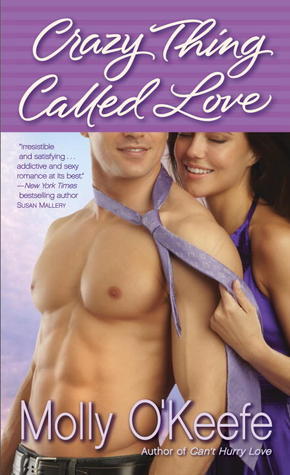
Review: Crazy Thing Called Love by Molly O'Keefe

My reviews of Molly O'Keefe's Crooked Creek Ranch series are probably starting to get a bit dull.

Here's a quick synopsis of the crux of each of my reviews,

Wow! These characters are fully fleshed-out, complex people. I completely believed in their romance because their path toward happiness was hard and took work, but the payoff was completely worth it! This pushes the boundaries of what we talk about when we talk about characters and stories in romance! Exclamation points!

Each of these three novels explores the path of challenging, driven, damaged people as they find happiness together. Crazy Thing Called Love features Madelyn (formerly known as Maddy), a rising star who hosts a morning talk show in Dallas, and Billy, an aging hockey enforcer whose career is at rock bottom.

Oh, and Billy and Maddy used to be married.

This is a scenario I usually would avoid reading, because generally speaking, it seems that relationships run their course for a reason, so the reconciliations generally read as superficial or not long lasting in the context of real life. However, in the case of Crazy Thing Called Love, the setup works. 

Billy and Maddy married young--way young--and while they were in love, they were also immature and their marriage was rooted in their mutual desire to escape their lives. Billy's hockey career was their ticket out.

Maddy left Billy, having lost herself and her identity amidst Billy's rising stardom and remade herself into a polished, confident local media star. But in a strange way, within her job she also loses a piece of herself, 

AM Dallas needed her to be the trusted, knowledgeable, well-dressed, and skinny best friend every woman in Dallas wanted to have. She didn’t have opinions, or outrage or passion. She smiled and told people about the delicious wonder that was gluten-free cheese.

Billy's in desperate need of a new image after spending the season riding the bench for the Dallas Mavericks (yes, this makes me snicker, because the Mavericks are a basketball team, not a hockey team). He has a lot of anger and bitterness and has the potential to go in a very dark direction. 

When Maddy's talk show proposes proposes a makeover of Dallas's notorious bad boy hockey player--clothes, hair, etiquette, the works--she balks, not wanting to revisit that part of her life and definitely not wanting her coworkers to know her past. But Billy embraces the chance to reconnect with his ex-wife.

Their forced renunion after 14 years is challenging, to say the least.

As a rule Billy didn’t believe in fate, but having her come back into his life when it was at its very darkest, that seemed important. Like something he shouldn’t ignore. Something he didn’t want to ignore.

Reportage: ALA Midwinter Meeting 2013

Laura, Sandra and I headed up to Seattle on Saturday to check out the exhibits at the American Library Association's Midwinter Meeting. 

This is a large conference and trade event for the library profession. I also saw a number of people with identification indicating that they were teachers or educators, authors, agents and, of course, bloggers (I didn't see as many as I expected, however--I suspect the smaller midwinter meeting doesn't attract as many people who travel just for exhibits). The Big Six publishers all have a presence, as do many of the smaller ones, such as Algonquin, Soho and a number of independents I wasn't familiar with. Notably missing was the Harlequin empire, which I understand only exhibits at the major ALA conference in the summer. 

Here's a roundup of some observations from ALA--this is by no means exhaustive, as I was only able to spend a day and didn't attend any of the social activities. (Though we did get to hang out with Mindi for half a day, which is more awesome than any of the organized meet-ups.)

The vast majority of the books showcased were young adult and younger titles. We intentionally went on the "spotlight on adult fiction" day so we could see a diversity, but with the exception of some literary and women's fiction and a few key imprints or publishers, most were targeted at younger readers. I heard a number of librarians complain about this to exhibitors, which I though was interesting gossip. I was pretty disappointed that several publishers didn't even have their adult fiction catalogs available. I was also their wearing my educator hat, and was seeking non-fiction I could use in my communications classes, but only Wiley had much in the way of academic titles featured. 

I was pretty shocked at how little romance was being promoted, since I know that it's the most popular genre and that libraries carry romance pretty heavily. I assume more of this is showcased to librarians at their larger annual meeting. Even in the YA exhibits, it definitely skewed toward the fantasy/science fiction/historical fantasy realm (fans of YA fantasy should be very, very happy this spring and summer) or Issue Books (eating disorders, cutting, incest). 

This is a Post About Plagiarism

I am a plagiarism hardliner. And I'm unapologetic about it.

Most of you probably know that I teach digital communications at a college in Portland, Oregon. Because it's an art school, my students are particularly concerned about the possibility of their work being stolen if they put it online. The majority have already experienced some iteration of plagiarism and know how it leaves the victim feeling violated and demoralized.

I completely understand why they're so fearful. Plagiarism and copyright infringement (two different things) are absolutely rampant. I've had my own work stolen and reused more times than I can count--and there are probably far more incidents that I'm even aware. As a result, I have no sympathy whatsoever for individuals and companies who steal others' work. It's wrong and I tell my students that they have every right to fight back--and I practice what I preach and fight back too.

Most recently, the entire Clear Eyes, Full Shelves RSS feed was scraped and republished on a site that also hosts pirated ebooks. Not only has my own work (and Laura's, Sandra's and Rebeca's and posts of our guest contributors) been stolen, it's being used to facilitate the theft of other people's intellectual property as well.

It's a double-whammy of suck.

Early Review: Nobody But Us by Kristin Halbrook

We gotta be hidden here in this new world we made. Just silence keeping all the shit of the real world away.

I rarely reflect on authorial intent when reading. I figure, once a book's in the wild, it's meaning is up to each reader's interpretation. 

I think readers will find each of those concepts in Nobody But Us, depending on what they want or hope to read, but I'm still unsure as to what the intention of this story may be.

Regardless, what I do know is that Nobody But Us is a strong debut, and a stark depiction of teens facing horrid circumstances which they're ill-equipped to handle.

Nobody But Us is told in alternating (and very distinct) perspectives from the points-of-view of WIll and Zoe. Will has just turned 18 and aged out of the foster care system. Now legally an adult,  Will hopes to escape his dead-end, hard-scrabble, small North Dakota town with his girlfriend. Zoe is younger, 15, and flees with WIll to escape her violent father. The pair sets out on a road trip, destined for Las Vegas where they hope to blend into the anonymity of the city and remake their lives.

Before I knew escape, life was something to be endured, passively. Now I hunger for it.

Except running from the past is a hard thing.

Links + Things: Literary Rape, Loneliness, Teen Death Novels and More

There were so many intriguing/interesting/irritating things on the internet this weekend, guys--It's hard to pick just a few!

Links

What I want is for there to be less gratuitous literary rape. 
I’m not talking about books like Speak. I’m talking about novels where the rape scene could just as easily be any other sort of violent scene and it only becomes about sex because there’s a woman involved. If the genders were swapped, a rape scene wouldn’t have happened. The author would’ve come up with a different sort of scenario/ backstory/ defining moment for a male character. Really, this sort of rape is such a medieval, classical way to tell a story. Need to establish some stakes? Grab a secondary character and rape her. Possibly with a god or a mythological object if you have one handy. 
And that starts to feel a lot less like realism and more like a malingering culture of women as victims. And it starts, especially when the author is male and the rape scene is graphic, to feel suspiciously like the goal is titillation. It starts to feel like the author believes the only interesting sort of GirlAngst is sexual abuse. 

Maggie Stiefvater writes one of my favorite author blogs. Even when I don't agree with her (like her take on what is and is not a review), I respect that she puts hers thoughts out there in the world in an unapologetic way--so many authors avoid anything controversial because there's risk involved with wading into big issues. 

Last week she wrote very eloquently about the problem of literary rape, how rape is constantly used as a plot device, often with no purpose. Go read Maggie's post on the subject--she's 100 percent right on all counts.