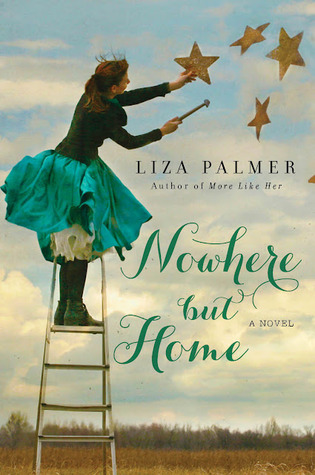
Review: Nowhere But Home by Liza Palmer

I discovered Liza Palmer's piquant novel Nowhere But Home thanks to Angie, who described it as,

"Recommended for fans of Friday Night Lights, comfort food, and top-notch storytelling."

As readers of this blog know, those are effectively my three favorite things, so, of course, I dropped everything else and picked up a copy of Nowhere But Home (which, incidentally, name-checks FNL on the back cover). Needless to say, this warm, funny and emotionally authentic story about a chef who finds herself begrudgingly back in her hometown not only met those expectations, it's most certainly destined to be one of my favorite reads of 2013.

Queen (Queenie) Elizabeth Wake's mother, the late B.J. Wake, gave her a big name so she could escape the Wake family destiny: that of serving the role of resident lowlife of the Hill Country town of North Star, Texas.

Queenie's sister, Merry Carole, followed in their mother's footsteps, having a scandalous teenage relationship with the town's golden boy football player and their son now is--quite controversially--the rising star quarterback on the North Star football team. Queenie, however, got out of North Star, first thanks to college in Austin, and then thanks to a series of chef jobs all over the United States. Yet once again, she's been fired--this time from a New York CIty hotel restaurant because she refused the ketchup a customer requested (I'm right there with you, Queenie). Out of options and with nowhere left to go, Queenie returns home to North Star. 

The red light blinks. Welcoming me home. What's the exact opposite of blaze of glory? I look around my dusty Subaru, cut-off jeans, and think: me. This. This is what the exact opposite of a blaze of glory looks like.

Review: Riptide by Lindsey Scheibe

Lindsey Scheibe's debut novel, Riptide, has an intriguing hook: surfing, best friends and alternating points-of-view (and let's not forget the appealing cover). It's one of the novels--along with Some Quiet Place--which Flux promoted enthusiastically at the midwinter ALA meeting.

However, despite all of that promise, Riptide ​proved to be a bit of a disappointment. With the exception of the surfing scenes, which were quite vivid, I found myself wanting more depth and focus from this story.

​Riptide is told in alternating points-of-view by Grace and Ford, childhood friends in southern California who live for the surf and sand. Grace can't wait to leave her troubled home, where her father is prone to angry, violent outburst and she's not allowed a much of a social life.

Fragmented images fly through my head—some fun, some scary. Surfing at the beach, Dad’s face when he’s angry, shopping, jogging in the park with Mom, Mom lecturing me on making a good impression, wearing clothes I don’t like, working out with Ford. Then come the big fears. The possibility of having surfing taken away if I screw up and lose my class rank. Not knowing when Dad’s going to explode. Whether or not I can bring it to the Jack n John Surf Comp. It’s like being on an out of control tilt-a-whirl at a carnival. Even on a dream weekend, I can’t escape the stress of home.

As a result, she's pinned all her hopes of escape on a surfing scholarship at University of California-San Diego (I didn't realize this, but there surfing is a sport some schools--mostly in California--actually offer scholarships for). When the opportunity to enter a world-class surfing competition presents itself, an opportunity that could mean catching the eye of UCSD's surfing coach, Ford enters Grace into the competition and she spends the summer training while Ford interns at Grace's father's law office.

Mini Reviews: A Mystery Mixed Bag

It's been well-documented that I love mysteries of all sorts. I recently devoured three, all of which I recommend--but with varying degrees of enthusiasm.

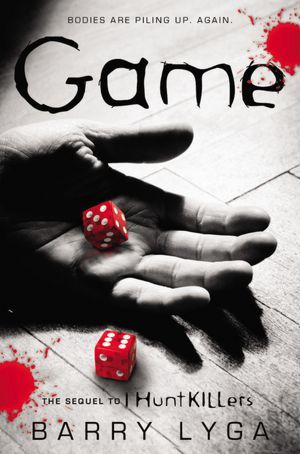
Game (Jasper Dent #2) by Barry Lyga

I Hunt Killers, the first in Barry Lyga's series featuring Jasper Dent better known as Jazz, a serial killer's son, ended with a cliffhanger--a seriously obnoxious one. Game was released about two weeks after I finished “Killers” so my wait wasn't too painful.  But, Game goes beyond cliffhanger. It leaves you plummeting off the cliff with no way of knowing or guessing what the landing will entail.

Billy Dent, Jazz's serial killer father, roams free to continue his dastardly deeds while Jazz searches for him in New York City. In contrast to his demented father, Jazz has come to his own understanding of humanity and his place in the world.

People are real, Jazz told himself, repeating his mantra. People matter … Jazz had always thought that his past was his own burden to bear, but could it be possible that he was meant to have people around him? Was this the true meaning of “People are real. People matter?

Jazz confronts his past, his own emotional pain and commits himself fully to finding and bringing down his father.

Connie, his girlfriend,  goes against her parents wishes and her own common sense  to follow Jazz to the city with the intention of helping him, even saving him from whatever may come.  

I closed the pages of the second in Lyga's series, frustrated and irritated. Everyone I liked best in the novel was heading down a winding road toward a collision. Nothing is resolved, and this does not read as a complete story.

I haven't found a date for publication of the sequel to Game.  So it goes. I'll just have to wait.

Today in Ridiculous B.S.: "The Julie Taylor Test"

Today, Laura tweeted a post from Salon's entertainment section, to which I reacted quite viscerally.

This (somewhat link-bait-y) piece is called "The Julie Taylor Test," referencing the daughter fo Eric and Tami Taylor on Friday Night Lights, and it's absolutely dripping with sexism. The author, Willa Paskin, asserts that bad acting can be identified by comparing the performer suspected of bad acting to Julie Taylor on Friday Night Lights, portrayed by Aimee Teegarden.

She argues, 

Enter the Julie Taylor Test, an easy way to identify bad TV acting: Ask yourself, is it  to imagine the inner life of this character? If no, is it possible to imagine the inner life of the characters surrounding him or her? It was all too possible to imagine the inner lives of every character on “Friday Night Lights” but Julie.

The thing is, using Paskin's own example, Julie Taylor has an immense inner life (watch The Giving Tree, S3E10, if you don't believe me).

However, her "inner life" is that of a teenage girl, so there are two strikes against Julie the character and Aimee the actress.

Links + Things: Even More on "New Adult," Justified + Kentucky, Internet Culture, Cheapo Books + More

We're back with our mostly-weekly roundup of interesting stuff from around the web.

On a blog-related housekeeping note, I'm going to be posting less frequently on the @FullShelves twitter for the time being. It's becoming increasingly-difficult to manage two accounts, and some particularly nasty remarks made about this blog, its contributors and others popping up in that account tipped the scales in the direction that it's just too challenging at the moment to be active on that account.

I'll still be posting links to the new posts there as well as a few links and such, but I'll be scaling it back. I will check that account's replies, but may not be able to respond as quickly as I have in the past. I'm sorry to those of you I chat with frequently on Twitter, hopefully I'll figure out a way to make it work down the line, in the meantime, our personal Twitter accounts are in the blog sidebar. 

This Week's Video of Awesome

This one completely cracked me up: every fake website from Law & Order (h/t to The AV Club for this one)! I love how crazy/creative/low budget some of these sites were. 

Audio Review: Time Between Us by Tamara Ireland Stone

Between my blog post about audiobooks and a desperate cry on Goodreads and Twitter for audiobook recommendations, there were several suggestions of Tamara Ireland Stone's debut novel, Time Between Us. I'd been curious about this book anyway, as I am a tremendous sucker for time travel or parallel universe-type stories (I lay the blame for this squarely on Fringe). 

I figured giving this particular book a whirl, since I had a couple of gratis Audible credits, and while I had extremely mixed feelings about The Time Between Us, I still enjoyed it quite a bit and am definitely onboard for the sequel, because there's something about this story that's extremely engaging and entertaining--and this was very much bolstered by the narrator's performance. 

Time Between Us is set in 1995 Evanston, Illinois and is told in the first person present perspective of Anna, a 16-year old avid runner who works in her father's bookstore and dreams of traveling the world. She meets Bennett, a boy she first spots at the track where she runs and later enrolls as a temporary student at the private school she attends. 

The two embark on an intense, whirlwind of a romance, culminating in Anna's discovery that Bennett has a big secret: he's from 2012, not 1995 and has traveled through time in search of someone from his present. 

Much of this premise mirrors the plot of the hordes of paranormal YA novels that exploded in recent years: average girl, mysterious book, special powers, etcetera, etcetera. However, despite that the basics of Time Between Us are nothing new, there's something fresh and fun in the writing and the engaging pace of the story. Some of this is because of the travel-meets-time travel aspect which we see through Anna's enthusiastic, very (in a good way) teenage eyes. But it's also because the wintery Evanston setting is well done and Anna has friends whose characters are well-developed and important to the story. She has a rich life before Bennett--she simply dreams of more.

Unfortunately, as much as I was swept up in Anna and Bennett's story and the question of if and how they could possibly be together, there is much in this story that's problematic.

Guest Post: Hannah Returns & Laments, "Writing is hard!"

Note from Sarah: You may remember Hannah's wonderful guest post last year in which she asked, "Has fiction ruined my life?"​ Well our favorite London teen is back, lamenting that while she loves writing, it's often a frustrating, solitary, crazy-making experience.

Sometime between the ages of four and five I officially decided I wanted to be a writer, and it was a decision I have suffered for ever since.  

In some far off ideal world, I would get an idea, I would write down said idea, it would make sense and there would be rainbows, and music would fill the land, and people would dance, and all would be well with the universe. But actually, when I sit down to write, I repeatedly succumb to inept feelings of inadequacy, which rather alarmingly seem to be increasingly growing in abruptness,  preventing me from feeling like I am progressing.

I think the problem is that I set my goals too high. It’s just that I feel like I would be able to write the best books in the world if  I could just expand t some of the half formulated ideas that dwell within the confinements of this 18 year old cranium to their full potential. To me, it seems as though there is a vast  ocean of unwritten novels that sloshes inside my thoughts, and in theory, I should be able to salvage handfuls of them whenever I feel like it.

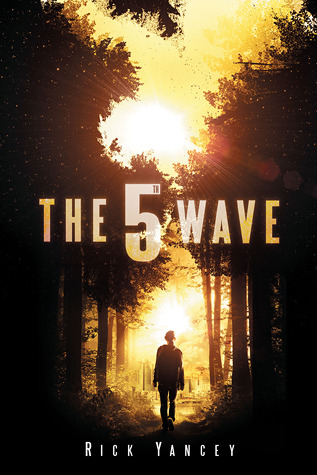
Review: The 5th Wave by Rick Yancey

But if I’m it, the last of my kind, the last page of human history, like hell I’m going to let the story end this way. I may be the last one, but I am the one still standing. I am the one turning to face the faceless hunter in the woods on an abandoned highway. I am the one not running but facing. Because if I am the last one, then I am humanity. And if this is humanity’s last war, then I am the battlefield.

Earlier this year, I happened to meet the editor of Rick Yancey's The 5th Wave at the ALA Midwinter Meeting. I'm not exaggerating when I say that she accosted me, and forced The 5th Wave into my hands, despite my protests that I'm not really a science fiction reader and that I had major burnout on post-apocalyptic/dystopian novels.

She promised that this one was different, that this wasn't like those other books, that if I liked character-driven stories with lots of moral conundrums, I'd love this book (she clearly had my number on those counts). Then, because I was probably still looking doubtful, she told me that The 5th Wave was her favorite book she'd worked on. There was something that told me that this wasn't a line, that she she loved this book that much.

Just a few days later, my curiosity got the best of me and I cracked open The 5th Wave.  Let's just say, I never bring print books with me, instead relying on my ereader or Kindle app to read on the go. However, my review copy of The 5th Wave went everywhere with me while I was reading it--it's simply that excellent.

The 5th Wave opens after aliens have invaded and attacked Earth. First, electricity was destroyed with an electromagnetic pulse; then the coasts were enveloped by rising seas; next, an Ebola-like plague wiped out much of the population; then, what were effectively alien sleeper cells were activated, and the few remaining humans can't trust anyone. 

I know what you're thinking: Another post-apocalyptic novel?

The 5th Wave isn't just another post-apocalyptic novel. It's it's character-driven, it's complexly-plotted, it's frightening. 

While The 5th Wave is written in multiple points-of-view, Cassie, the teen narrator of the largest chucks of the novel, is the character whose voice will likely receive the most attention. She's one of the few who's managed to stay alive during the invasion, but not without a high, high cost. She lost her mother to the third wave (the viral infection), her father in the fourth wave and her younger brother is now missing--Cassie is alone in the world, dodging snipers and making life and death decisions in order to survive.  

Verse Week: I <3... Lisa Schroeder

Not long after the experience of reading Love and Leftovers by Sarah Tregay, I frantically hunted down as many verse novels as I could. Apparently, a lot of other people in the Fort Vancouver Regional Library system felt the same way, because none of them were available, thereby forcing me to add them to my library hold list in what felt like a holy test of my (notorious lack of) patience. And add to my list I did. Juvenile, YA, Middle Grade, whatever. Like a drug addict desperately in search of a fix, I was willing to read any category, any genre -- as long as it was a novel-in-verse.

The first book to become available was Far From You by Lisa Schroeder. Everything about it looked promising, from the snowflakes on the cover (since I love snow) to the jacket bio informing me that Lisa Schroeder is a local author, both of which would have been ample reasons for me to award bonus stars to my final book rating.

Turns out I didn’t need them.

So engrossed was I by Far From You that I finished the book in one frantic sitting, when I had originally intended to sneak in just a few pages while my SHO showered and got ready for our outing to the local Farmer’s Market.

So captivated was I by Lisa Schroeder’s verse that I gobbled up the rest of her then-published YA novels, all of which were in verse, within three months.

So enthralled I am with Lisa Schroeder’s storytelling that I (a lazy person who does not enjoy leaving the house or driving) drove to a Barnes and Noble 25 miles away from my house to snag a copy of her most recent book, a prose novel with strong poetic elements, when I found out it had been released into the wild at that particular bookstore a few days before the official release date.

And so obsessed I am with Lisa Schroeder’s books that when it comes to her novels, I simply cannot adhere to my policy of keeping one book by a treasured author unread as an emergency reserve for those times when I desperately need to read a book I know I will love.

To ease the hardship of not knowing when I will get to read another new Lisa Schroeder book, and in celebration of our Novels-in-Verse week here at CEFS, I decided to pull all of her books off of my shelves (oh yes, I have hard copies of them all) and reflect on just why I heart Lisa Schroeder.

Verse Week List-O-Rama: For the Verse Averse

We know despite our saying over and over again that verse novels are absolutely nothing to fear, some of you may still be nervous about trying out a verse novel.

As a result, I thought I'd point those of you who may want to ease into verse to some traditional novels with poetic or verse elements. Similarly, easing into verse novels with books for the younger set can be a fun way to test out the form without committing to a long, complex verse novel for teens or adults.

Once you've tried a few of these on for size, head over and give our Verse Week 2013 podcast a listen for more first-verse recommendations.

Falling for You by Lisa Schroeder | Simon Pulse (2013)

Lisa Schroeder is well known for her verse novels, but her most recent YA novel, Falling for You, is told in prose format, but contains loads of poems (the narrator is a teenage poet) that are key to the story. I really, really enjoyed this book, but I will warn you that the summary, cover and title aren't particularly related to the actual story. This is really a novel about finding family where you least expect it.

Review | Amazon | Goodreads

Graffiti Moon by Cath Crowley | Knopf Books (2012)

Graffiti Moon is one of my favorite all-time books, it just so perfectly captures that type of night that can only happen the summer after high school. Told from multiple points of view, Graffiti Moon includes a perspective entirely in poems. Some of my favorite moments are the poems evoking the Melbourne night--they're absolutely vivid.

Review Amazon | Goodreads

Verse Week Guest Post: Gabrielle Prendergast on Backstory & Writing in Verse

We're halfway through our annual Novel in Verse Week celebration here on Clear Eyes, Full Shelves and today we have verse novelist Gabrielle Prendergast who shares an inside glimpse on the challenges of creating backstory with the verse format. Enjoy! ~Sarah

One of the challenges for any author, particularly one who writes contemporary novels for teens, is the task of revealing backstory. Because I started out as a screenwriter, backstory, as it is frequently revealed in contemporary young adult books, does not come naturally. I tend to still see my stories as screenwriters do, as a series of scenes in a mostly linear narrative, so diversions into reminiscence feel awkward to write.

But backstory is critical, and in contemporary first person narrated young adult novels, it plays a huge role in getting to know the main character through their past actions and experiences. “Show don’t tell” is the mantra. Delving into the past allows us to see how the characters became who they are rather than them having to tell us.

Writing in verse, while it shares the conciseness and imagery of screenwriting, nevertheless is antithetical to screenwriting when it comes to inner life. In screenwriting it is a never ending struggle to reveal a character’s inner life, never mind their past, without resorting to flashback or voiceover. In verse novels techniques that are analogous to flashback and voiceover are essential. 

Verse Week List-O-Rama: Got History?

While novels in verse tend to focus on contemporary settings and situations, historical novels in verse, like May B--which Sandra reviewed earlier today, historical fiction has a pretty strong hold in the verse format as well. 

Let's take a look at a few.

Crossing Stones by Helen Frost | Farrar, Straus and Giroux (2009)

Laura highly recommends this novel in verse by Helen Frost which chronicles the experiences of two families during World War I. ​The main character, 18-year old Muriel, becomes interested in the women's suffrage movement, so it's a good choice for folks who are also interested in women's history.

Amazon | Goodreads

Three Rivers Rising by Jame Richards | Knopf Books (2010)

I recently bought this slim novel in verse which focuses on two teens in the late-1800s who cross class barriers to forge a friendship, and eventually a romance. Their happiness is threatened when the Johnstown flood sends 20 million gallons of water into Johnstown, Pennsylvania. ​This definitely falls into the "poetic" side of the verse novel spectrum.

Amazon | Goodreads

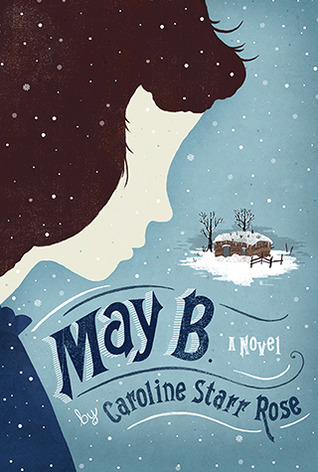
Verse Week Review: May B. by Caroline Starr Rose

Before putting my fingers to the keyboard to write my review of May B., a middle grade novel in verse by Caroline Starr Rose, I went to the Poetry Foundation's website to see if my confusion between poetry and prose could be clarified. The answer I found didn't particularly surprise me.

To put it in the simplest of terms, it's all about snobbery. Poetry, according its aficionados, stands several rungs above verse. Verse does not--according to them--employee the sophisticated use of language that poetry does.

Alrighty then...

Keats apparently writes poetry and Robert Service apparently writes verse. What's the difference? I've yet to answer that one but I will say that I read Service for pleasure, for the joy of his playful and often robust use of language. Keats I read as assigned work in my studies at the universities where I earned my degrees. I enjoy and appreciate Keats, so I am not picking on his work, I promise. My point is about the joy of language, pure and simple.