Review: Sanctum by Sarah Fine

When Laura and I chatted with the folks from Amazon Children's Publishing at the ALA Midwinter meeting earlier this year, they were heavily pushing Sarah Fine's Sanctum as "the next Angelfall." While on some level I understand the comparison--Angelfall features angels who are quite demonic, Sanctum is set in an afterlife full of demon-like creatures--the two books aren't read-alikes and likely don't share a audience. 

With that said, as a fan of adult urban fantasy, Sanctum hits where so many other young adult novels billed as urban fantasy miss; it's a creative and unique novel I'd recommend to fans of the genre, teen or adult. 

Lela Santos, who's spent much of her life in the foster care system, is finally settled into a good life at the beginning of Sanctum. She's thinking about college--something she never believed possible; she has an unlikely best friend in the form of Nadia, who's the popular girl Lela never believed would be her friend; she has a stable life in a safe home. That crumbles when Lela's best friend kills herself in a bout of depression Lela didn't see.

Racked with grief and guilt, Lela begins to have visions of her friend tormented in a horrible place.  In her distraught frame-of-mind, she tries to find closure about Nadia's death, but instead (stay with me here--this sounds a bit wacky, but it all makes sense in the story) she winds up dead thanks to a freak accident. Lela plummets into a terrifying underworld, the same place she saw in her visions. Determined to find Nadia and figure out a way for them both to escape, Lela enters the Dark City, a terrifying, shadowy place where lost souls wander. 

This city is a scary place. Food is inedible, demon-like creatures called Mazikin wander the streets looking for bodies to possess, and the guardians of this creepy place are pretty scary too.

Links + Things: Can't Think of a Clever Post Title Edition

I'm back with another abbreviated Links + Things (we'll be back to our regular posting next week).  

Required Reading

And JJ Abrams has approached xenobiology and xenoanthropology in a very Star Wars way in his reboot. Background puppets abound, used to illustrate the diversity of the universe, but this is still a universe where the actions of the humans are those that matter. Scotty has a non-verbal alien friend who plays an almost identical role to Chewbacca in Star Wars; he’s a silent cipher whose words must be surmised only through the pauses of the more plot relevant human. Kirk bags a space babe, but she’s mostly just a sight gag. And there are Romulans and Klingons, but they’re villains–obstacles to overcome, really. But still not people, not fully, not yet.

I meant to share this outstanding, thought-provoking post from author Phoebe North (Starglass) last week and somehow omitted it. She dissects diversity and otherness in the context of the new Star Trek movie, and points to J.J. Abrams' frequently problematic treatment of alien characters in his work. This is a companion to her earlier post about Star Trek: Into the Darkness, which (warning) contains spoilers, but is an important read. 

We don’t want the behaviors of this septic culture to become or seem normalized. If we’re quiet about it, we contribute to the normalization of misogyny or any of the other cultural poisons.
Like I said the other day, this isn’t about playing the hero — we aren’t going to fix it with our magical man-hammers, and women are not our Death Star Princesses to rescue. But we can signal boost. We can support. We can be on the side of the angels instead of the side of the diseased dick-bags (they don’t rate being devils, honestly) who want to trumpet their hate and rampant shittiness. We can try to do better and ask that others do the same.

This week author Chuck Wendig (Blackbirds) wrote an unintentional three-part series about sexism as a result of the mess of misogyny from the SFWA (which I mentioned last week). I recommend reading each post, but the last one about why men should speak up about this type of behavior struck a chord with me.

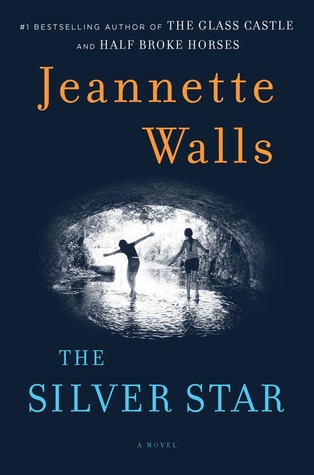
Review: The Silver Star by Jeanette Walls

Jeannette Walls’ latest novel, The Silver Star, opens with Jean, AKA Bean, recounting the story of how her sister, Liz, saved her life when she was only an infant. Bean (aka Jean) and Liz are sisters, one twelve and the other fifteen, who have faced life as a team. They’ve always stuck together giving one another the stability that their mother did not or could not provide for them. When things got bad in one place, their mother would slide out of town in the dead of night taking her little girls with her.

Bean and Liz, one twelve and the other fifteen, are sisters who have faced life as a team. They’ve always stuck together giving one another the stability that their mother did not or could not provide for them. In one of their quick exits out of town, a problem arose because mom in her dash toward freedom, had stashed things in the trunk leaving her infant child in a carrier on the roof. Dash, rush, run - oops - she forgot the minor issue of said infant left in a carrier on top of the car. Three year old Liz begins screaming her baby sister’s name and pointing at the roof. It took a some time to communicate to the manic mother the state of affairs. She slammed on the brakes, the carrier slid onto the hood, baby’s strapped in, so no harm’s done. 

Their mother loved to tell the story. She thought it was hilarious. Neither child saw the humor. Mom’s version tilted itself in her favor, as always.
Mom was going through a rough period at the time of the near fatal incident. She had a lot on her mind -- craziness, craziness craziness, the girls would say when hearing the story time after time.

Like Half Broke Horses by the same author, The Silver Star is considered fiction, but draws heavily on Walls' own family. The first work of Walls I read was The Glass Castle. It’s the biographical account of her wildly eccentric family, one that defines disfunction. Her father dreamed of building glass castles for his family to live in while he traipsed from one town to the next with them in tow, often leaving under the cloak of night to avoid paying bills--they had no money, so escape was the quick solution while he wove tales of magical new opportunities that would surely appear soon.


Links + Things: Semi-Short & Sweet Edition

Just a semi-quick roundup of links this week, since I'm on a semi-vacation at home this week and next. So, just bulleted news, cover art and some good deals on books in this edition. We'll be back to our regular programming shortly.  

Recommended Reading

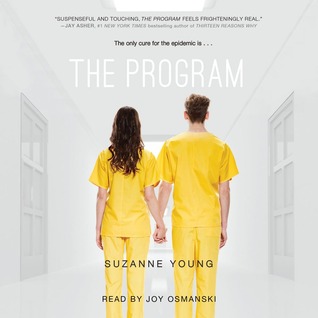
Audiobook Review: The Program by Suzanne Young

“...some things are better left in the past. And true things are destined to repeat themselves.”

Suzanne Young's new novel, The Program, somehow got slapped with the label "dystopian." I'm not sure if this was thanks to early publicity or the viral nature of Goodreads shelves,  or something else, but this likely inadvertent label has stuck, and it's one that seems to have stuck. Unfortunately, the dystopian label does this intriguing and unique novel a huge disservice.  

If I were to slap a genre name on The Program, I'd say it's speculative fiction or allegorical alternate reality (which I don't think is actually a genre). It's set in a very familiar world, much like the modern day (it's set in my home state of Oregon, so it felt particularly familiar to me). Except in this iteration of our world, teen depression and suicide are an epidemic, one that's dealt with in an extreme way, hence The Program.

The Program is an extreme course of treatment for teen depression, in which memories of all things negative, painful and emotive are removed. Any extreme reaction can result in a trip to The Program, and those who return from the "treatment" are shells of their former selves.

In the case of The Program's narrator, Sloane, she's already seen what can happen to those who are untreated--her beloved brother died as a result of suicide, and it destroyed her parents. She made it through the dark days following her brother's death thanks to her boyfriend (and her brother's best friend), James. Together, they fight the darkness that threatens them. After that, a bunch of stuff happens (obviously, since it's not exactly a short book), all of which will massively spoil The Program if I share the details. But, let's just say, what Sloane experiences is quite harrowing and explores a number of compelling concepts including memory and social control.  

The BFF Paradigm

“The myth of the BFF can be difficult to live up to. In film and television, we often see female friendships portrayed in a highly romanticised and unrealistic manner; uncomplicated and lasting forever despite the differences of the women involved. When women’s relationships are at the centre of the narrative – Sex and the City being the most obvious example – it seems that best friendship somehow transcends all else. ”  
 
— The myth of the BFF and the end of female friendships (The Guardian)

Recently, I had the pleasure of engaging in a fabulous chat on Twitter with Trinity, Reynje and Laura prompted by Trinity's tweeting a link to the article quoted above. This piece was written by a contributor to Just Between Us, an anthology of writing by Australian authors on the topic of female friendships. The depiction of female friendships--and particularly the BBF (best friend forever) relationship--is one that I frequently find personally challenging in books, movies and television. Most of the time, those depictions aren't relavent to my own experiences, and in my discussion with Laura, Reynje and Trin, it sounds like I'm not alone. 

Thinking back to elementary and high school, I remember the distinct feeling that there was something wrong with me that I didn't have a best friend. That's what we saw on Beverly Hills 90210 (the original show), right? Not to mention my mother and most of the adult women I knew still had the same best friends they'd had when they were twelve, so the inevitable questions from well-meaning adults would often head in that direction I name whatever casual friend was around the most at any given moment, but that overwhelming feeling of being defective because I didn't walk around with half of a friendship charm. 

That's not to say I didn't have friends and a reasonably full social life. In high school, I had a group of friends--girls and boys--that I spent time with and had a lot of fun with. A few of those people I'm still in touch with. When I went to college, there were a couple of those high school friends who I thought may be that best friend forever that adults told me I should have, but distance (pre-email and Facebook and even texting--the horror!) made that challenging. Late in my sophomore year of college it hit me that one close high school friend with best friend forever potential had faded into my history, rather than being a part of my present. I was so very sad about that.

In college, I had a similar, loose circle of friends, but that group was largely comprised of couples--it wasn't the Sex and the City fantasy (this was when SATC was popular) full of shoe shopping, gossip-fueled brunches and hangovers. Aside from my now-husband, I'm only in touch with one of those people, though I have wonderful memories of my four years with that group. By that point, I'd pretty much come to terms with the reality that I simply was going to be the anomaly, that person who didn't have a best, lifelong female friend. (This was around the same time I realized that my real best friend forever was my now-husband.) 

Now that I'm older (in my 30s), I realize that friendships change, grow and end, and that's part of the cycle of our social relationships as humans. Sometimes people come into our lives for a period of time, and there's value in appreciating those relationships while we have them. I know that I'll never fit in at a "Girls Night Out" (just as I always felt out of place and awkward at slumber parties at twelve), that my enjoyment of solitude and aversion to gossip and large groups will keep me from obtaining the sorts of female friendships depicted in popular culture.

Links + Things: Superheroes, Super-Detectives, Super Book Discounts and More Super-ness

Happy Friday, all!

It's time for another edition of Links + Things, a roundup of interestingness around the web. This is a slightly abbreviated version, since I don't have any cover art news and I haven't spotted any got-to-see YouTubes lately. Make sure to scroll down to the end for a selection of discounted books I've found recently.

Required Reading

I’m tired of the way the tension was ruined for me in Spiderman 2 by the sexualized shot of Mary Jane in chains with all its allusions to bondage and sexual victimization. I’m tired of Bruce Wayne taking women to bed but refusing to be straight with them about who he really is (and I’m also tired of him only sleeping with women who have no personality or canned personalities). I’m tired of the general consensus that Tony Stark’s womanizing behavior is “amusing.” (And if I were Pepper, I would dump his sorry ass faster than he could say, “I’ll be home late tonight!”) I’m tired of seeing the smart, competent Moira McTaggert, Charles Xavier’s worthy love interest, disguised as a stripper. In short, I’m tired of women appearing in these movies as though they are one more nifty accessory, like a Batman’s “batarangs” or Green Lantern’s Power Ring, just another perk of being a superhero.

Author C.K. Kelly Martin tweeted this outstanding piece about the problematic nature of recent superhero movies. I have so many mixed feelings--and honestly, a bit of guilt--about my affection for superhero flicks (and action movies in general) and this pretty much nails it.

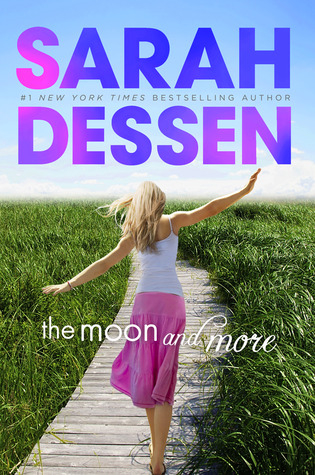
Review: The Moon and More by Sarah Dessen

Sarah Dessen is one of those authors whose books I know I will like before I've read the summary. Just the Dessen name on the cover tells me that I'm in for a good read full of authentic, relatable experiences that are never overwrought or dramatic. 

Dessen's latest, The Moon and More, offers exactly that, but with a bit of a fresh flavor, since it heads in a different direction than her books typically do.  Despite what the back cover summary may indicate, this is less a summer romance, and more of an introspective journey.

The Moon and More is narrated in first-person by Emaline, who lives in Colby, the fictional North Carolina town that will be familiar to long-time Dessen readers (it's based on Emerald Isle, N.C.). It's the summer before college and despite getting into Columbia, she's headed to a nearby state school, thanks to a full scholarship. She's headed there with longtime boyfriend Luke, who's a fun, crazy about Emaline, fun and comfortable. She helps her mom, dad, grandmother and half sisters run the family's summer home rental business and has a good life in her small town. 

Then she meets Theo, who's spending the summer in Colby working on a documentary about a highly-regarded artist from the town. He has big dreams and believes Emaline's been thinking too small regarding her future. Her biological father too thinks that Emaline should be thinking bigger, and lets her know so when he arrives in Colby with her young half brother in tow. 

There's a difference between the words father and dad.

Review: Oath Bound (Unbound #3) by Rachel Vincent

The third (and supposedly, final) installment in Rachel Vincent's Unbound series, Oath Bound was one of my most anticipated novels of the year. The unusual, mob-style world and distinctive, yet not overwhelming, paranormal elements have made this series one I've enjoyed immensely, and recommend often.

​Fortunately, Oath Bound met my expectations and while I didn't love it as much as the second book in the series, Shadow Bound, it equalled the quality of the gripping first novel, Blood Bound. However, for an alleged final book in a series, I was definitely left feeling that there was quite a bit more needed in order for the series to achieve closure (though as with the previous books, the story itself comes to a satisfying ending). 

Note: I have made every attempt to not spoil either of the two previous books in this series. While this novel would be best read after reading Blood Bound and Shadow Bound, it could be read as a standalone.​

Here's quick primer on the Unbound world: The best comparison I can make is to Holly Black's Curse Workers series (which I also highly recommend). Some people are Skilled, and are able to utilize their Skills for a specific purpose, such as tracking people with just a name, teleporting via dark spaces, jamming tracking skills, binding contracts in a way that they're unbreakable or seeing future events. Like in the Curse Workers series, these talents are often commandeered by crime families, whose organizations exploit the Skilled for the benefit of their criminal enterprises. These organizations are ruthless, and the particular city these novels take place in are ruled by two rival, ruthless syndicates: Tower and Cavazos.

The Unbound series explores the theme of free will quite extensively, as that's the most valuable commodity in this world.

​Each of the books in the Unbound series are told from two first-person points-of-view. In Oath Bound, one of those points-of-view is Kris, the brother of Kori, who was a narrator in Shadow Bound, and Kenley, an important secondary character in both this novel and the previous installment. The other narrator is a new introduction, Sera, who's the secret daughter of Jake Tower, former leader of one of the Tower syndicates.

Historical Fiction Done Right - A Northern Light by Jennifer Donnelly

I've been doing a lot of reading lately that doesn't really feel necessitates a formal review. This is partially because I intentionally don't read all books with reviewing in mine. When I plan on reviewing a book, I stop, take notes, highlight, all that stuff. At the pace I read, that's overwhelming to do that for each and every book.

However, sometimes I still want to share my thoughts on ​some of these books.

That's the long way of my saying that this isn't a "review" of Jennifer Donnelly's A Northern Light. Instead, it's more a few impressions of why this historical novel worked for me when so many others have not. 

The crux of the story set in 1906 upstate New York (around Utica and Cortland, in the Adirondacks) and centers around two converging stories. The first is 16-year old Mattie's life on a farm, where her aspirations of a bookish life and college in New York City collide with the economic realities of caring for her sisters and helping her father on the farm, as well as the expectations for a girl her age to marry and establish a household. The second story is a mystery around the death of young woman staying at the hotel where Mattie works who's body is found in ​the lake. (This is drawn from real events, and also inspired the Book An American Tragedy and the film A Place in the Sun.)

A number of things distinguished A Northern Light for me, but the aspect that stands out the most is the approach to placing the novel in its historical context.

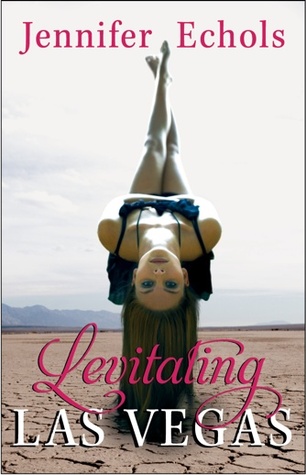
Review: Levitating Las Vegas by Jennifer Echols

Generally, I really enjoy it when authors take their writing in new directions. Maybe a contemporary/realistic author tries science fiction, or a speculative author attempts a mystery. So, when Jennifer Echols--who's a favorite author of mine--announced that she'd written a paranormal "new adult" novel, my interest was piqued.

Unfortunately, while Levitating Las Vegas had an interesting concept, the filmsy world-building, characterization and plot largely failed to to deliver.  

Holly Starr is a Las Vegas showgirl and recent college grad who has taken medication for years to prevent hallucinations that started as a teen, hallucinations that she could levitate. She's tired of spending her nights assisting in her father's magic show and hopes to forge her own path in Las Vegas. Her former classmate, Elijah also experienced hallucinations as a teen that he's been medicated for ever since. In his case, he believed he could read minds.

Both of their hallucinations threaten to return when the supply of their medication suddenly disappears, and they start to wonder if maybe they're not so crazy after all?

““Why the hell not?” Holly yelled back. “It doesn’t sound so bad when I think about all the shit you and my parents have put me through. Just for starters, all the edamame, Kaylee. My mom brainwashed me into purchasing and steaming my very own edamame even now that I’m out from under her roof, just to keep my weight down. Do you know how many cookies I’ve missed out on in the last seven years, all in the name of pleasing my parents despite my fake debilitating mental illness? God!” ”

Thus ensues a mayhem-filled story that includes everything from a kidnapping (Elijah kidnaps Holly) to a show-stopper of a magic trick involving nudity and the Hoover Dam.

With this wild premise, Levitating Las Vegas could have been a fun read, and I did have moments when I really enjoyed it (such as Holly, who'd never driven a car, "driving" it down the Strip in her own unique fashion) and am a sucker for caper-style plots, as a big fan of urban fantasy, I expected more in terms of logical construction of the world and magic.

List-O-Rama: Thinking About Summer Reading

Summer reading tends to be feast or famine for me.

My work schedule gets a bit weird, so I alternate between no free time and loads of it. As a result, I tend to be a bit more random with my reading choices (which is saying something, since I specialize in random and don't keep a reading "schedule" like many folks do) and binge on series or authors and try a lot of stuff out that piqued my interest that I previously passed up due to business, etcetera.

Here are a few (actually, a whole lot) of books I'm thinking about tackling this summer.

Darkest London Series by Kristen Callihan

I picked up the third book in Kristen Calligan's Darkest London Series at ALA earlier this year, not realizing that it was part of an ongoing series (I started reading Winterblaze and was promptly confused). I find myself more and more intrigued by historical fantasy (is that what the sub-genre is called?) and this one while having pretty trashy covers, comes highly recommended by several folks whose taste I trust.

Amazon | Goodreads

The Paranormal YA Series Enders

I have a weird habit with series endings: I kind of hate them. There's so much pressure for series to end "right" and in the case of paranormal YA, since there's not a lot that I love, love, love, with Jeri Smith-Ready's Shade trilogy, Rachel Vincent's lengthy Soul Screamersseries and Kim Derting's Body Finder quartet, it's not just series ending stress I'm facing--I'm also looking at not having a lot left in the genre that intrigues me.

Shade Series on Amazon | Goodreads
Soul Screamers on Amazon | Goodreads
The Body Finder on Amazon | Goodreads

Links + Things: Gendered Books, Hulk vs Grizzly, More Tiger Eyes News, Recommended Sale Books + More

Happy Friday, all! This week's Links + Things is a bit on the light side as I burned up a lot of my best stuff last week.

This Week's Video of Awesome

I asked my husband if he'd seen any fantastic YouTube videos lately and, naturally, he sent me this clip of the Incredible Hulk fighting a grizzly bear. ​It's quite excellent, no?

Required Reading

There’s room for all kind of heroes and heroines and some of our greatest stories happen to be love stories too. Love, friendship, sexual attraction— all essential parts of life. It’s only when girls or women become the audience that we start to turn our noses up at something that we all care about.

I loved author Leigh Bardugo's response to a reader who's frustrated that YA books aren't "geared towards guys," as she hits the nail on the head with regard to something that always bothers me: the dismissal of stories involving romance and love. Sarah Rees Brennan added some additional thoughts that are spot-on as well.

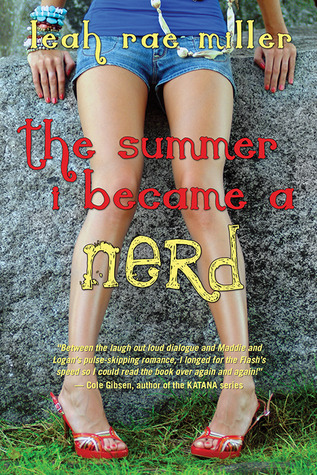
Review: The Summer I Became a Nerd by Leah Rae Miller

I had no idea that a book in which LARPing receives so much page time could be so endearing and fun. 

Leah Rae Miller's debut novel, The Summer I Became a Nerd is lighter fair done right. While it's not breaking any ground, there's a lot of merit in reading a breezy book that's so engaging. I often find myself disinterested or just plain bored with this type of novel, particularly in YA, but this hits a lot of sweet spots with fun humor, a believable teen voice and a warm story about the importants of being true to oneself.

Following a traumatic experience as a middle schooler, Maddie has ​hidden her love of comic books, science fiction and all things "nerdy" from her friends in pursuit of popularity and fitting in. She's a cheerleader, she dates the quarterback, she listens to the "right" music that her popular group of friends listens to. 

This carefully-constructed facade starts to crumble when the final issue of her favorite comic book is on backorder and she forces herself to go to the local comic book store (in "disguise," naturally) in search of the book.

There’s only one place in town that would have a copy. Is the risk of being seen and losing my place atop Natchitoches Central’s elite worth it? No. Absolutely not. It’s been a long, hard climb to the top of the popularity ladder. It took a lot of deceit and subterfuge to get people to forget The Costume Incident.

It turns out the comic book store is owned by the family of a nerdy boy from Maddie's school, Logan, who isn't fooled by her disguise or her feigned coolness. Quickly, the two begin spending time together, as Logan introduces Maddie to his world full of LARPing, video games and comic book conventions.

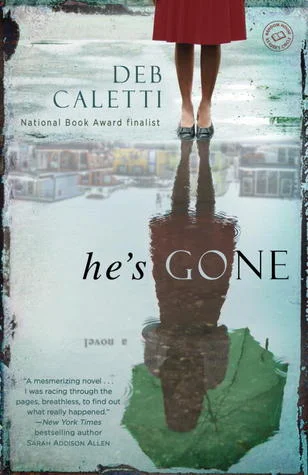
Review: He's Gone by Deb Caletti

The clanging sailboats and the wind in the trees and the groaning dock and that wide, wide night sky say only one thing back. He’s gone, they say. He’s gone, the darkness and the empty street say, too.

I've read and enjoyed several novels for teens written by Deb Caletti, most memorably The Nature of Jade and The Story of Us (invest in some Kleenex before reading that one). What consistently struck me most about Caletti's novels is that she develops backstory with a slow-burn reveal. It's subtle and effective.

When I learned last year that she was publishing an adult novel, He's Gone, it quickly became one of my much-anticipated 2013 reads, as I was certain Caletti's style which I knew from her young adult fiction would likely translate well to a novel dealing with adult issues. 

He's Gone did not disappoint in terms of twisty backstory, and while it definitely heads in a darker direction than fans of Caletti's YA novels may be accustomed to,  this unusual journey into the secrets of a marriage is both fascinating and mysterious.

Memory is such a sadistic, temperamental little beast.

He's Gone unfolds from the first-person perspective of Dani Keller, who wakes up after a night out at a part with her husband, Ian, only to find that he's disappeared. Dani doesn't know what happened, as she unwisely combined painkillers and booze in order to cope with the stress of attending a party at Ian's company.

The novel focuses on the aftermath of Ian's disappearance and Dani's struggle to figure where he went and why he disappeared. Did he leave? Was he having an affair? Is Dani responsible? Was their marriage in jeopardy? Was nothing of Dani and Ian's life together as it seemed?

There is that dream, and that memory, and those damn pills. A black hole of forgetting and remembering. Is there a secret self I am not willing to see? If it was me, if I have done something … Please, let it not be so. I need to stop this mad, pointless unraveling, this panicked fluttering. I am making fools of the good people around me. 


Links + Things: Colbert on The Great Gatsby, Mean Girling, The Importance of Pleasure Reading, Guinea Pigs in Outfits, Cheapo Books, Discounted Tablets + More

Better late than never, right? Welcome to this week's edition of Links + Things!

This week I've got a bunch of interestingness for you, including guinea pigs wearing cute outfits, a fabulous discussion of the practice of mean girling, the importance of reading for fun and some good discounts on ebooks and Nooks/Kindles.

This Week's Video of Awesome

I had to choke back tears of laughter watching Levar Burton explain The Great Gatsby to Stephen Colbert and Carey Muligan.

Required Reading

Reading for pleasure leads to greater self-understanding, the fostering of social relations, greater well-being, improved cognitive and academic development, and a higher disposition to participate in civic society…

The Canadian government's National Reading Campaign commissioned a study about the benefits of reading in terms of, well, its impact on society. What is most interesting is that it reveals that reading for fun reaps many rewards--yet another reason to think twice before deriding anyone's choice in reading material.